


Marcus
Ask me anything, I am here to help you.
Enquiry Form
Enquiry Form
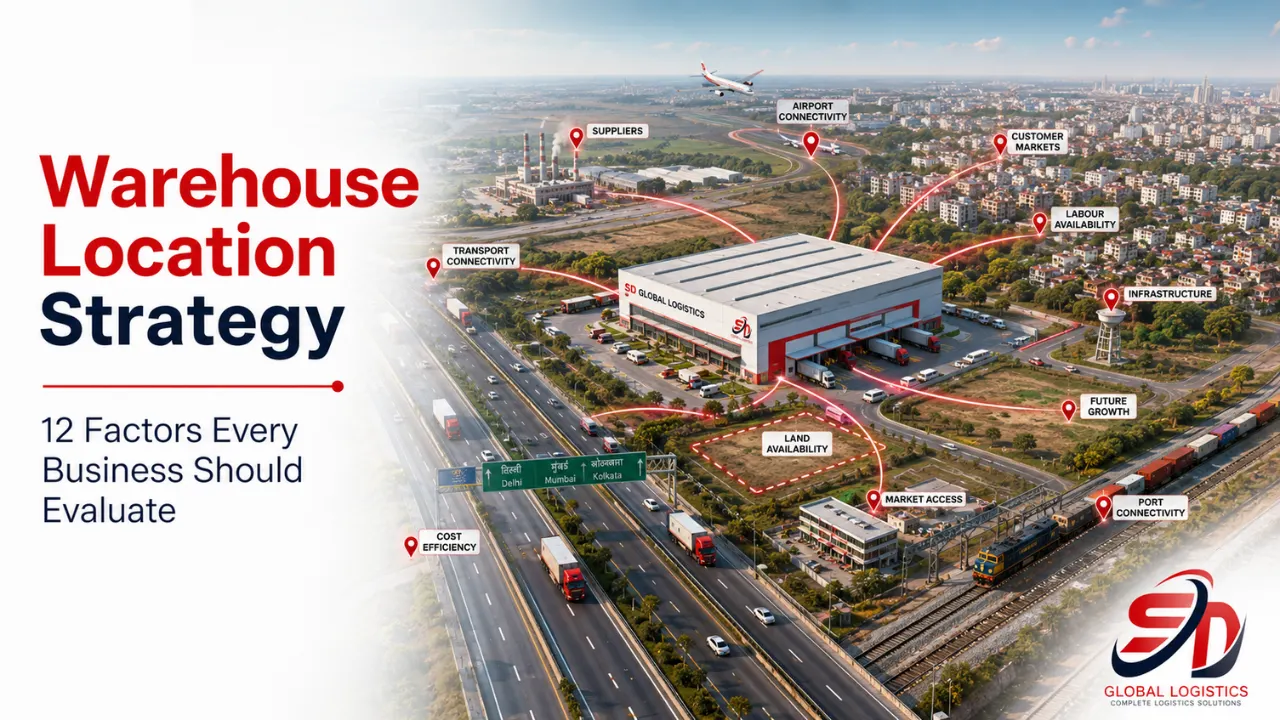
Warehouse location strategy is the process of selecting where to place your warehouse based on how it affects your total supply chain — not just what the lease costs. A poor choice here echoes through every shipment, every delivery promise, every invoice. Think of it like choosing the foundation of a building. If the ground isn't right, nothing you build on top will stand well.
Most businesses compare rental rates and pick the cheapest option. That approach ignores how location shapes warehouse transportation costs, delivery speed, labor access, customer satisfaction, and long-term growth. A warehouse in the wrong place can quietly drain margins for years before anyone notices.
This guide breaks down 12 critical factors to consider when choosing a warehouse — drawn from how real businesses make this decision in India and beyond.
Your warehouse sits at the center of your supply chain. Every inbound truck, every outbound shipment, every returned product moves through it. When the location works well, goods flow fast. When it doesn't, you're fighting inefficiency every day.
A good warehouse location cuts transit time to customers, shortens inbound routes from suppliers, and keeps transport costs under control. India's logistics cost is estimated at 7.97% of GDP, according to a joint study by the DPIIT and NCAER. Small firms spend 17% of output on logistics, while large firms spend only 7.6%. That gap often comes down to infrastructure decisions — including where warehouses are placed.
The cheapest warehouse is not always the most cost-effective warehouse.
A facility with low rent but poor road connectivity will push up freight costs. A remote location may save on real estate but lose customers who expect next-day delivery. Warehouse location planning requires you to weigh multiple factors together — not just one line item on a spreadsheet.
Location also affects how quickly you can scale. A warehouse that works perfectly for 500 orders per day might collapse operationally at 2,000. Choosing a strategic warehouse location means thinking about where your business is going, not just where it is today.
A warehouse near customers shortens delivery time and lowers last-mile costs. For an e-commerce brand shipping across North India, a warehouse in Delhi makes more sense than one in a smaller town 300 kilometers away — even if the rent is half.
FMCG companies, retailers, and D2C brands all benefit from being closer to their end consumers. B2B distributors serving industrial buyers in western India may need a facility near Pune or Bhiwandi, not a distant one in a lower-cost zone. Proximity directly impacts how fast goods reach the customer and how much each delivery costs.
No warehouse works in isolation. It depends on national highways, expressways, state roads, railway connections, and in some cases, proximity to airports or ports.
A site connected to a major highway junction can handle inbound and outbound freight efficiently. A site down a narrow single-lane road will create bottlenecks every day. For businesses with a multi-modal approach, railway access can significantly reduce freight costs — rail transport costs just ₹1.96 per tonne-km compared to air at ₹72 per tonne-km.
Good connectivity also means reliable last-mile roads for delivery vehicles. Always check the condition of the final 5–10 kilometers of road leading to any potential facility.
Rent is visible. It shows up on a lease document. But the true cost of a warehouse includes:
• Rent and deposits
• Transportation (inbound and outbound)
• Labor wages
• Utilities and power
• Handling and packaging
• Applicable taxes
• Inventory management carrying
A warehouse with ₹18/sq ft rent and ₹6/kg freight can be far more expensive than one at ₹22/sq ft with ₹3/kg freight. Always calculate warehouse operating costs as a total picture. This is the single most common mistake businesses make during warehouse location selection — comparing rent without comparing total cost.
Warehouses need people — pickers, packers, forklift operators, supervisors, quality checkers. If a location has limited access to this kind of workforce, you'll struggle with hiring, retention, and shift coverage. Key challenges in Indian warehousing include a shortage of skilled labor.
Wage levels matter too. But availability matters more. A location near a semi-urban settlement with steady labor supply and reasonable commute times often outperforms a remote site with lower wages but chronic absenteeism.
For manufacturers and assemblers, inbound logistics costs can be just as significant as outbound. A warehouse near a manufacturing facility cuts the gap between production and storage, reducing transit damage, delays, and handling costs.
Consider an automotive parts company in Pune. Placing a distribution warehouse within 30 kilometers of the plant means finished goods reach storage the same day. Compare that to shipping everything 800 kilometers to a hub in another state — every extra truck trip adds cost and risk.
Not all buildings are warehouses. A proper facility should have:
• Adequate clear height (typically 28–32 feet for racking systems)
• Level, VDF or tremix flooring
• Multiple loading and unloading docks
• Sufficient truck turning radius
• Reliable power supply with backup
• Fire safety systems
• CCTV surveillance and security
Poor infrastructure slows down every activity inside the warehouse — from receiving to dispatch. Choosing a location with proper infrastructure from the start prevents expensive retrofitting later. Warehouse storage solutions are only as good as the building they sit inside.
Same-day delivery, next-day delivery, and standard delivery all demand different warehouse placements. A brand promising same-day delivery in Mumbai needs a facility within or very close to the city — not in an industrial park 120 kilometers away.
For Pan India warehousing models, companies often need multiple distribution center locations across regions to meet varied delivery windows. What works for a 3-day delivery SLA won't work for a 24-hour promise. Your delivery commitment should drive your location decision.
Where are your orders actually coming from? Many businesses set up warehouses based on gut feeling or convenience. Smarter ones study their order data.
Analyze:
• Top customer pin codes
• Monthly sales volume by region
• Order density maps
• Seasonal demand patterns
• Growth trends in specific markets
Warehouse location should follow demand, not just cheap real estate.
If 60% of your orders ship to South India but your only warehouse is in Gurgaon, you're spending more on freight than you need to. Warehouse location optimization starts with understanding your demand geography.
A warehouse that perfectly fits your current inventory may become a bottleneck in 18 months. Businesses grow. Product lines expand. Order volumes spike during festivals.
Look for locations that offer room for expansion — either within the same facility or through nearby available space. Locking into a fixed-size warehouse with no scalability options forces you into costly relocations later.
This is especially relevant in India, where demand is spreading beyond major metros into tier 2 and tier 3 cities as companies seek wider coverage and shorter delivery times.
Every warehouse must comply with local building codes, zoning laws, fire safety regulations, and environmental rules. In India, you'll also need relevant trade licenses, Shops and Establishments registration, and GST compliance based on your location.
Some states offer more streamlined approval processes. State-level CLAPs have introduced single-window clearances that shorten approval cycles, especially in Maharashtra, Gujarat, and Tamil Nadu.
Do not assume that compliance requirements are the same everywhere. Verify what's needed for your specific operation and location. This is not legal advice — always consult with local authorities and qualified professionals.
A warehouse without proper systems is just a storage shed. Modern operations depend on:
• WMS (Warehouse Management System) for real-time inventory tracking
• TMS (Transportation Management System) for route planning and freight management
• Barcode or RFID scanning for accurate picking
• Order management integration with sales channels
• Reporting dashboards for visibility
Technology doesn't just improve accuracy — it reduces labor dependency, speeds up fulfillment, and makes supply chain efficiency measurable. When evaluating a location, check whether the facility supports the technology infrastructure your operation needs.
Warehouses in flood-prone zones, areas with frequent traffic disruptions, or regions vulnerable to natural events carry operational risk. A single flood can damage inventory worth crores and shut down operations for weeks.
Evaluate:
• Flood history of the area
• Road reliability during monsoon
• Alternate route availability
• Power infrastructure stability
• Proximity to backup facilities
Your warehouse should remain operational during disruptions. Warehouse network optimization includes building redundancy into your logistics design, not just choosing the single lowest-cost node.
There is no universal formula. But there is a practical approach.
Create a simple scorecard. List your top candidate locations as columns. List the 12 factors above as rows. Score each location on a scale of 1–5 for every factor. Weight the factors based on what matters most for your business.
A D2C brand might weight customer proximity and delivery speed heavily. A manufacturer might prioritize supplier proximity and transportation connectivity. A distributor might care most about total logistics cost and scalability.
Compare total supply chain performance, not just warehouse rent.
This framework gives you a structured way to evaluate how to choose a warehouse location that actually supports your business — not just one that looks good on a lease agreement.
For businesses expanding into new markets or testing demand, a 3PL warehouse removes the risk of committing to a fixed facility too early. Contract warehousing offers a middle path — dedicated space and operations managed by a 3PL partner, combining control with flexibility.
India's 3PL warehousing market is expected to grow from USD 11.23 billion in 2025 to USD 16.76 billion by 2031 . The shift toward outsourced warehousing is accelerating because businesses want speed, coverage, and professional management without tying up capital.
The best location for a warehouse in India depends entirely on who you're serving
No single city works for every business. A company serving pan-India customers will likely need a multi-hub model. A regional player may need just one well-placed facility.
Warehouse location strategy is a supply chain decision, not a real-estate decision. The right location balances cost, speed, capacity, customer service, scalability, and risk — all at once. Getting even one of these wrong creates friction that compounds over months and years.
Whether you're opening your first warehouse or redesigning your network, evaluate every option against the factors that matter to your business. Don't chase cheap rent. Chase efficient outcomes.
















Warehouse location strategy is a supply chain decision, not a real-estate decision. The right location balances cost, speed, capacity, customer service, scalability, and risk — all at once. Getting even one of these wrong creates friction that compounds ....
View Blog
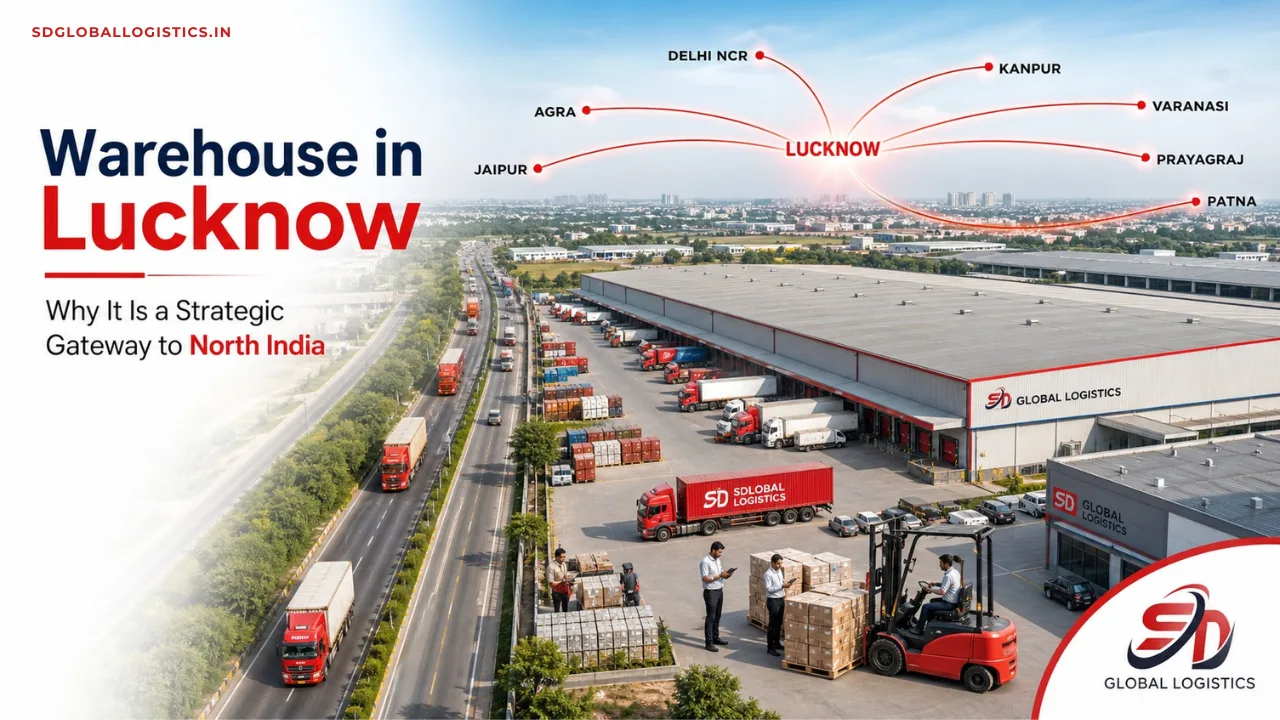
A warehouse in Lucknow places businesses close to the geographically central part of India's biggest consumer state. The very central location of Lucknow in UP, its expressway expansion, accessibility to almost 240 million people ...
View Blog
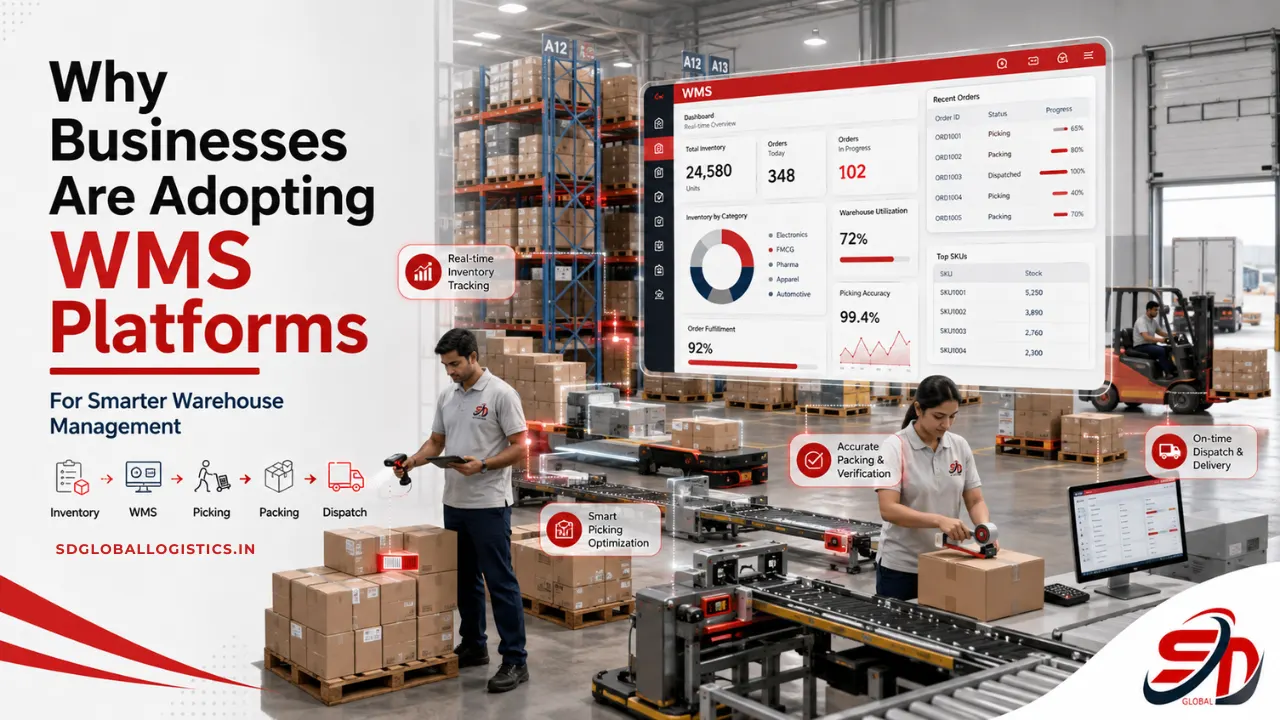
Businesses adopt a WMS platform because they need better visibility, improved inventory accuracy, fewer manual errors, and more structured warehouse operations — problems that spreadsheets and ...
View Blog
SD Global Logistics — your pan-India partner delivering scalable warehousing, technology-driven supply chain solutions and reliable, cost-efficient logistics for growing businesses
Developed By Rapiditors Technology India Pvt Ltd © 2025. All rights reserved.
Marcus
Ask me anything, I am here to help you.