

Marcus
Ask me anything, I am here to help you.
Enquiry Form
Enquiry Form
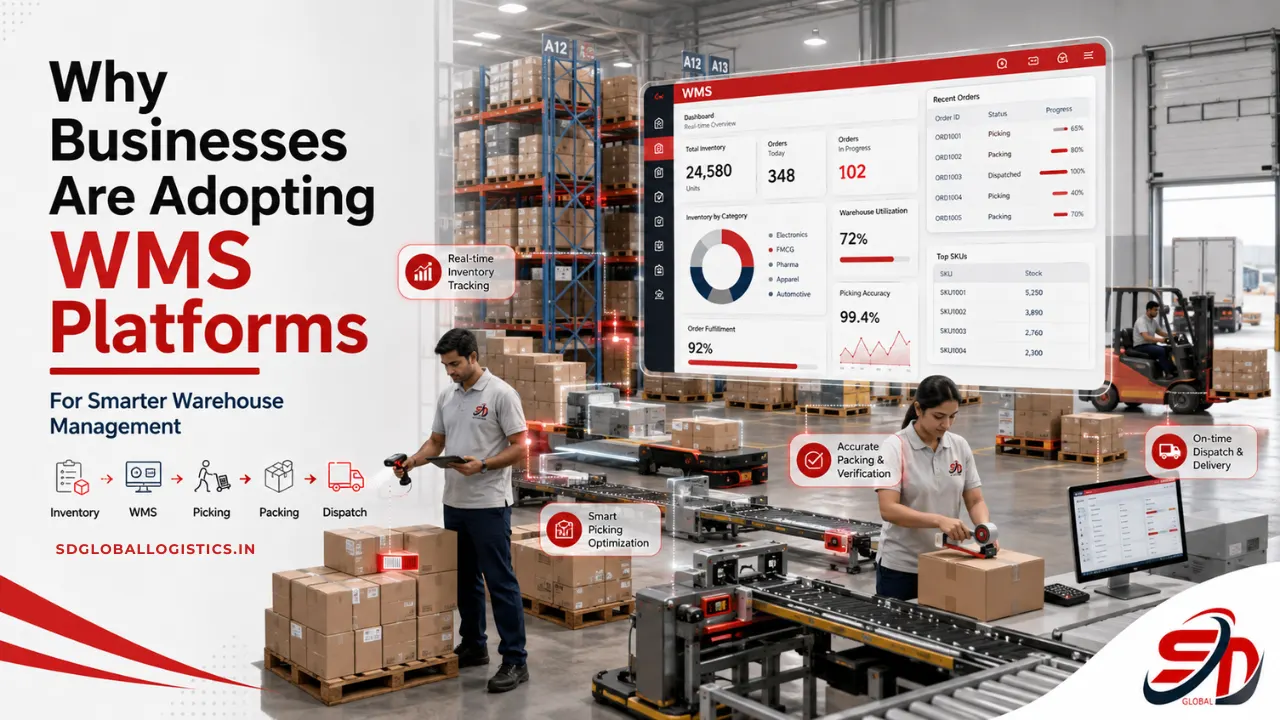
A Warehouse Management System (WMS) is software that helps businesses control and coordinate every warehouse activity — receiving, put-away, inventory tracking, picking, packing, and dispatch. The WMS market continues to expand as a result of the growth of e-commerce, rising fulfillment complexity, quicker delivery requirements, and the demand for visibility into operations in real time. Businesses adopt a WMS platform because they need better visibility, improved inventory accuracy, fewer manual errors, and more structured warehouse operations — problems that spreadsheets and paper-based processes simply cannot solve at scale.
Manual warehouse processes don't fail overnight. They erode gradually — a missed scan here, a spreadsheet entry delayed there — until the gap between what your system says and what's actually on the shelf becomes a daily problem.
Warehouses relying on manual data entry and paper-based tracking are prone to human error and inefficiencies. It's hard to make timely decisions and identify and resolve inventory discrepancies. Poor warehouse layout and organization make locating products quickly a challenge. Outdated or unsuitable software and hardware limit a warehouse's ability to track inventory accurately. Lack of integration between systems results in data silos and inconsistent information.
Here are the most common pain points that push businesses toward a WMS:
A majority of the problems in the warehouse are not inventory problems. They are visibility problems — and WMS brings that visibility.
The accuracy of inventory is the key to all other warehousing measurements. When your stock data is not reliable, there is a direct impact on your purchases, fulfillment and customer service.
Inventory accuracy is the foundation of warehouse performance. A WMS captures inventory movements in real time through barcode scanning, automated workflows, and digital tracking, significantly reducing stock discrepancies.
A well-implemented WMS supports accuracy through:
Put-away and picking are system-directed, so inventory is placed and retrieved from defined locations. This reduces variation in how work is performed and limits the chance of misplaced or untracked inventory. The business impact is straightforward: fewer stockouts, fewer overorders, and reliable data for purchasing decisions.
A WMS is not just about tracking inventory; it's about organizing the entire operational workflow. Every warehouse operation has a specified sequence with validation.
The primary benefit of a WMS is to optimize and streamline all warehouse operations, from inventory tracking and management to order processing and fulfillment, thereby enhancing overall efficiency and accuracy.
Consider how a WMS touches each stage:
A WMS benefits operational efficiency for both labor and physical space by monitoring work processes at various levels, enhancing productivity, and increasing asset utilization. A WMS establishes repeatable, verifiable processes that don't depend on the experienced workers to "know the system".
Knowing what you have — right now, not after a manual count — changes how a business operates. Warehouse managers, procurement teams, and sales teams all rely on the same truth.
Perhaps the most significant benefits of implementing a WMS relate to visibility. A WMS offers real-time visibility of stock levels in all locations. This transparency helps to prevent stockouts and also helps to reduce excess inventory. It's visibility across the network for multi-location operations.
Real-time visibility matters for:
A robust warehouse management system with real-time inventory insights can directly impact sales — from uncovering discrepancies to meeting customer demand and avoiding backorders. Without this visibility, purchasing decisions are guesses, and customer service teams cannot confidently confirm delivery timelines.
As e-commerce and retail businesses grow, spreadsheets and manual tracking are no longer feasible. As orders increase and stock grows, WMS technology is a must for ongoing success.
For ecommerce businesses, a WMS manages high daily order volumes, multiple SKUs, rapid inventory rotation, and returns processing — all of which require speed and accuracy that manual methods can't sustain.
For 3PL providers, the challenge multiplies. A 3PL warehouse is responsible for multiple clients with varying products, SLAs and reporting requirements. A WMS with multi-client architecture keeps each client's inventory, billing, and order data separate while allowing the warehouse operator to manage everything from a single platform.
SD Global Logistics, for example, uses an in-house WMS for real-time inventory and order visibility, with SLA-driven contract warehousing and flexible pricing models — combining industry expertise, robust infrastructure, and proprietary technology to manage inventory, optimize distribution, and accelerate order fulfillment across its Pan-India 3PL network.
A WMS manages what happens inside the warehouse. A Transportation Management System (TMS) manages what happens outside — carrier selection, route planning, shipment tracking, and freight cost management.
WMS is increasingly part of a broader execution ecosystem that includes transportation, yard, labor, and order management. Vendors are positioning their solutions as part of integrated platforms as opposed to stand alone applications.
When the two systems are integrated, dispatch planning is informed by real inventory availability, transportation schedules align with warehouse processing capacity, and the entire outbound chain moves in coordination rather than in silos.
SD Global Logistics' own WMS and TMS provide real-time inventory controls, automated alerts, and smooth API connectivity to client ERPs and marketplaces. This kind of integration is what transforms a warehouse from a storage facility into a responsive fulfillment engine.
Not every WMS needs to do everything. The right system matches your operational complexity. Here's a practical checklist:
Buyers are shifting from basic feature checklists to modern, cloud-native platforms that emphasize usability, adaptability, and rapid time to value. The best WMS is not the one with the longest feature list — it's the one that fits your warehouse's actual workflows and scales as you grow.
If any of these situations sound familiar, it's likely time:
The goal of most businesses is to continue to grow, making a WMS a necessity. Without one, as your business expands, warehouse and inventory management will become even more complicated, labor intensive, and likely unable to keep up with demand.
Selecting a WMS is an operational decision, not just a technology purchase. Consider:
From growing businesses to established enterprises, companies rely on SD Global Logistics to manage critical warehousing and logistics operations.















" We struggled with inconsistent inventory handling until SD Global stepped in with dedicated warehousing and tight process control. Their attention to detail brought stability to our entire supply chain. "

" Reverse logistics was a major pain point for us. With SD Global’s reverse logistics management and WMS integration, we finally got the visibility and efficiency we needed. "

" As a growing startup, flexibility was key. SD Global’s on-demand warehousing and responsive support scaled with us without locking us into rigid contracts. "

" Order delays used to slow us down. Thanks to SD Global’s order fulfillment and B2B logistics, we’re now running faster and more reliably than ever. "

" Our nationwide expansion needed a reliable network. SD Global’s Pan-India 3PL and shared warehousing model gave us the reach and agility we were missing. "
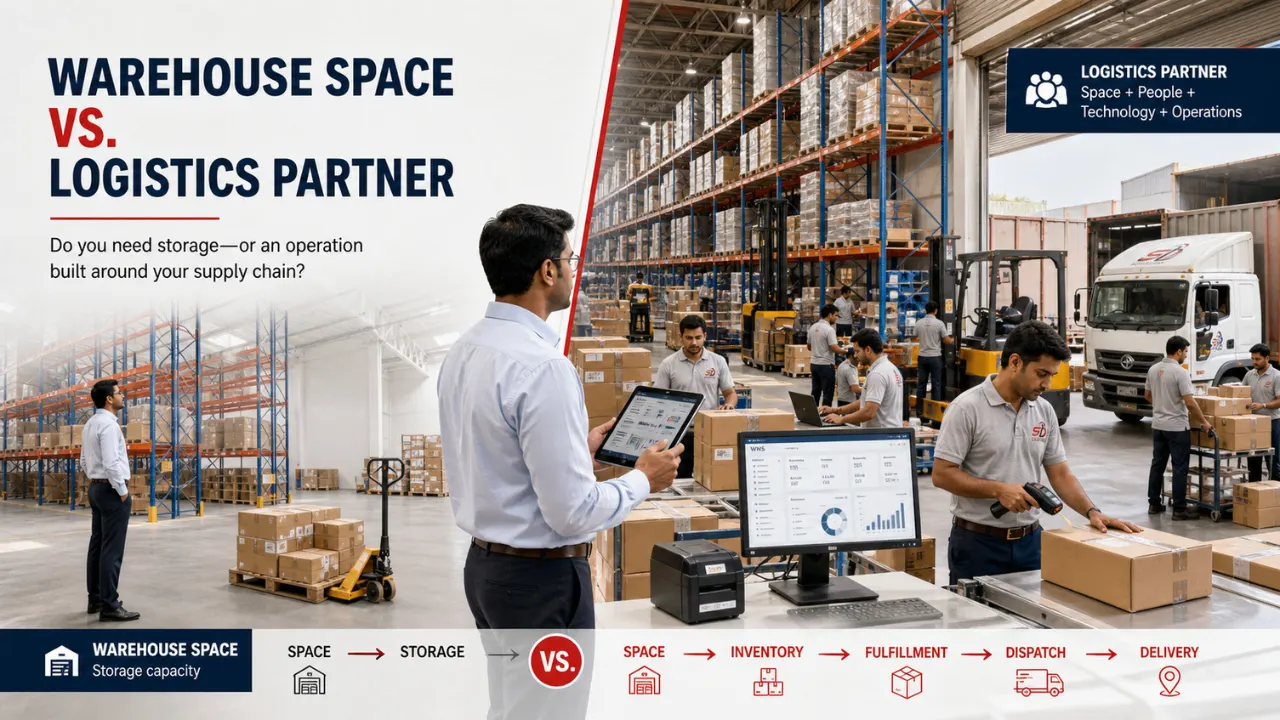

Hiring a warehouse gives your business a place to store inventory. With the hire of a logistics partner, you have the people, process, technology, fulfillment and expertise needed to effectively manage that inventory........
View Blog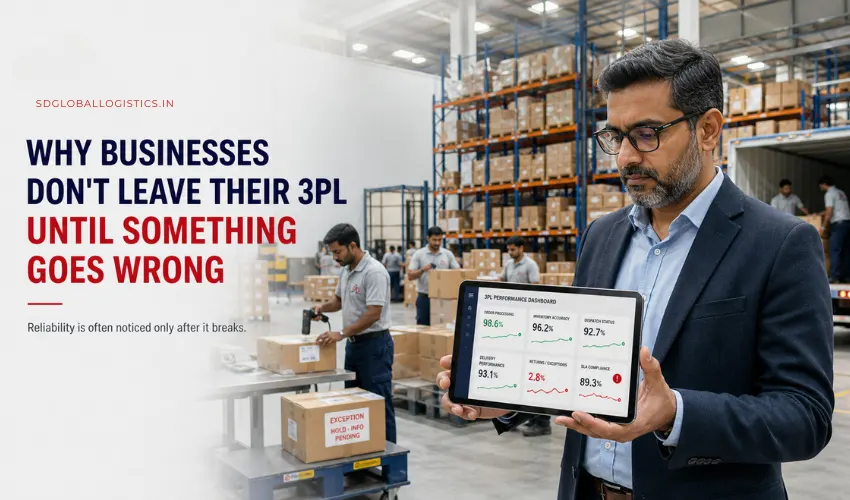
The reason many businesses remain with the same 3PL is that it is actually challenging to change warehouses, systems, processes, inventory, and transportation partners.When problems begin to impact customers, costs....
View Blog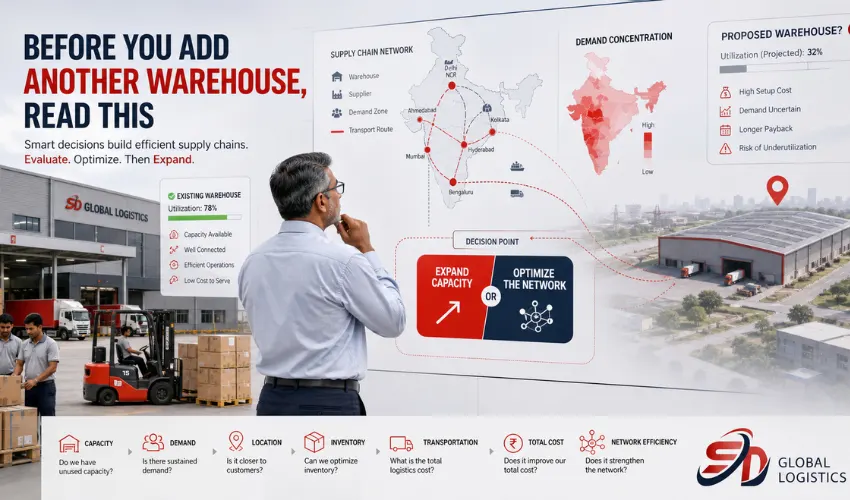
The answer is not always to build another warehouse. Before making a decision on an expansion, companies should look at true capacity utilization, inventory location, customer distribution, transportation costs, operational efficiency....
View Blog75+ warehouse locations positioned across major industrial, commercial and distribution markets.
Marcus
Ask me anything, I am here to help you.