

Marcus
Ask me anything, I am here to help you.
Enquiry Form
Enquiry Form
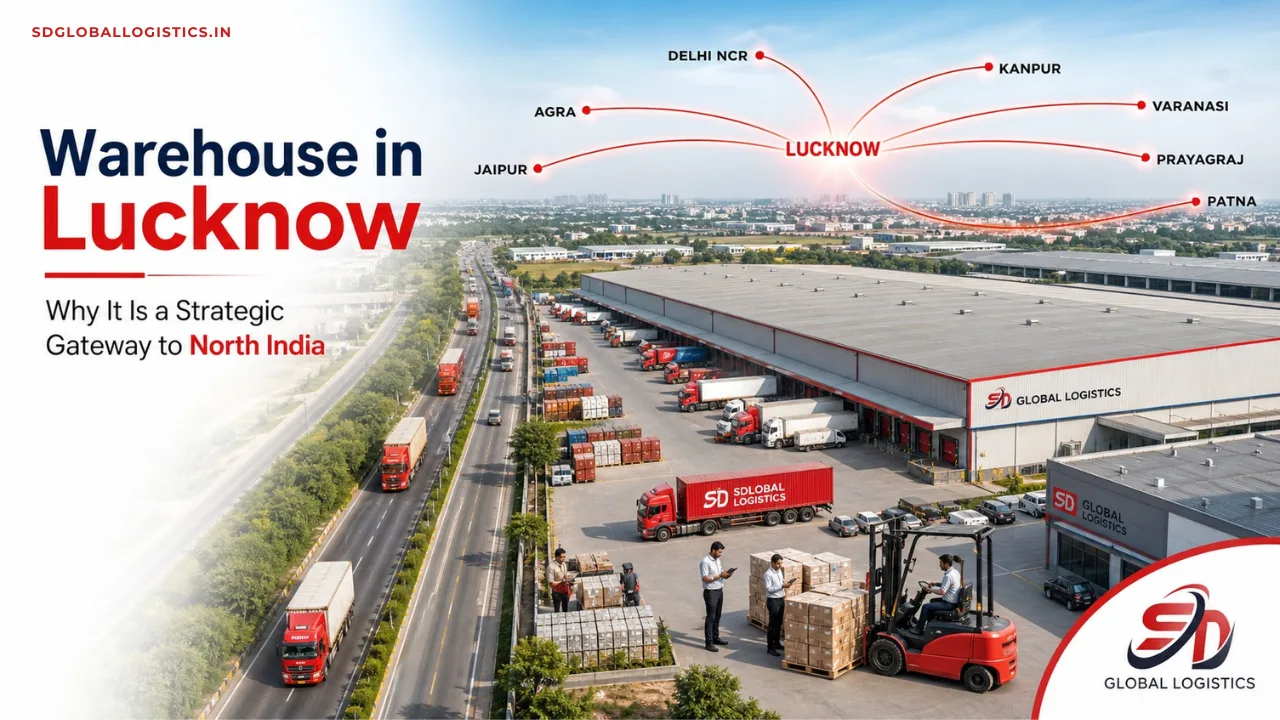
A warehouse in Lucknow places businesses close to the geographically central part of India's biggest consumer state. The very central location of Lucknow in UP, its expressway expansion, accessibility to almost 240 million people, and its developing logistics infrastructure make it one of the most advantageous places for regional warehousing and distribution in North India.
Here's what makes Lucknow a smart distribution decision — and how it affects real supply chain planning.
Uttar Pradesh has a GDP of more than USD 256 billion and the largest consumer base in the country with around 240 million people. It is the most populous state in India, with a GSDP estimated at Rs. 30.80 trillion (US$ 359.56 billion) in FY26.
If any manufacturer, FMCG company or any brand or D2C brand is willing to cater to North India, then UP is not a secondary market. It is the primary one. A distribution centre in Lucknow (the State capital) makes stock accessible within a day to virtually all the major districts of the State.
It's important because UP's freight volumes are enormous. According to industry estimates, UP carries about 245-260 million tons of intra-state freight , which includes major commodities such as food grains, construction material and retail goods.
Serving this market from Delhi NCR or distant hubs adds transit time, increases freight costs, and delays last-mile delivery. A Lucknow-based warehouse shortens every link in that chain.
What has changed the logistics equation for Lucknow in recent years is infrastructure. The city now sits at the intersection of multiple high-speed corridors:
This expressway network essentially makes Lucknow a hub-and-spoke centre. Now, with the availability of controlled access roads, freight can move out of a Lucknow warehouse to Kanpur, Varanasi, Prayagraj, Agra and even Delhi NCR, where it could not 5 years ago.
For supply chain planners, this changes inventory positioning decisions. Instead of operating two or three separate warehouses across UP, many businesses can consolidate into one strategically located facility in Lucknow and still meet delivery timelines.
The development of Lucknow is not only restricted to roads. The city has now become an attractive location for serious warehousing investment.
With a population of 4 million, Lucknow's warehousing stock reached 8.5 million sq. ft. Tier-2 and Tier-3 cities like Lucknow, Jaipur, and Coimbatore are emerging as fulfilment growth points as delivery windows shrink and brands need inventory closer to consumption centres.
The Lucknow-Kanpur Highway cluster increased its share of warehousing transactions sharply to 61% in 2025 , emerging as the dominant warehousing location. This shift was driven by occupiers' preference for southern micro-markets, supported by competitively priced land, larger contiguous parcels, and strong road connectivity.
The state is implementing projects like Multi-Modal Logistics Parks, Rapid Rail Transit Systems, and Expressways to reduce logistics costs from 14% to less than 10% of GDP.
For 3PL providers and contract logistics operators, this signals sustained demand — not a temporary spike.
The practical advantage of warehousing in Lucknow varies by industry, but the underlying logic is consistent: proximity to a massive consumer base, combined with multi-directional road access.
If the inventory is fast moving, then regional buffer stock is needed. A facility in Lucknow reduces replenishment cycles of distributors in central and eastern UP, which are typically under-serviced from Delhi-based warehouses.
The faster you can deliver, the more conversions you can get. Establishing fulfilment in Lucknow puts same or next day delivery in reach of large population from UP urban. Brands already using ecommerce fulfilment services can extend coverage without duplicating infrastructure.
A central distribution point is ideal for temperature sensitive, time sensitive products. India's need for cold storage logistics is seeing rapid growth, with considerable focus on developing cold storage facilities across tier 1, 2, and 3 cities.
To manage spares distribution through dealer networks in UP, regional stocking points are required. Lucknow's expressway access makes it viable as a single hub serving both western and eastern UP.
Regional distribution from Lucknow simplifies route planning and reduces empty-mile costs for secondary distribution across smaller towns and semi-urban markets.
Not all warehouse storage delivers the same operational value. Businesses evaluating warehousing services in Lucknow should consider:
Proximity to NH-27, bypass roads, and expressway entry points directly affects outbound transit times. SD Global Logistics' warehouse in Lucknow is situated in Transport Nagar, close to Kanpur Road (NH-25) and bypass link roads, facilitating fast distribution across northern India.
Cloud-based WMS and TMS solutions allow real-time tracking of inventory, which is crucial for brands that operate multiple locations and an omnichannel strategy.
Short-term on-demand storage and long-term contract logistics should be offered since demand in UP's market can be seasonal and unpredictable.
Pick-and-pack, labelling, kitting, and reverse logistics management reduce the need for separate service providers.
For companies already operating warehouses in Delhi NCR, Noida, or Gurugram, adding Lucknow as a regional node makes practical sense.
Delhi NCR handles western and northern freight corridors well. But serving central UP, eastern UP, and adjoining states like Madhya Pradesh and Bihar from Delhi adds 12–24 hours of transit time and significantly higher freight costs.
A Lucknow warehouse can help reduce workload for regional distribution from a north India logistics network, particularly for pin codes which the 'high-speed' metro logistics network may find more difficult to service.
This is also where third-party logistics services add strategic value. Instead of investing in owned infrastructure, businesses can plug into an existing pan-India warehousing network that includes Lucknow and scale capacity based on demand.
Logistics industry leaders highlight Lucknow's strategic importance as a logistics hub in Uttar Pradesh reshaping India's supply chain architecture. Experts are predicting that corridors in UP will drive new investments in distribution centres, cold chains and manufacturing hubs as consumption in Tier 2 and Tier 3 cities increases.
The infrastructure coming online — Ganga Expressway, Lucknow-Kanpur Expressway, Lucknow Link Expressway — isn't speculative. These are operational or near-completion projects that are already influencing where companies place inventory.
From growing businesses to established enterprises, companies rely on SD Global Logistics to manage critical warehousing and logistics operations.















" We struggled with inconsistent inventory handling until SD Global stepped in with dedicated warehousing and tight process control. Their attention to detail brought stability to our entire supply chain. "

" Reverse logistics was a major pain point for us. With SD Global’s reverse logistics management and WMS integration, we finally got the visibility and efficiency we needed. "

" As a growing startup, flexibility was key. SD Global’s on-demand warehousing and responsive support scaled with us without locking us into rigid contracts. "

" Order delays used to slow us down. Thanks to SD Global’s order fulfillment and B2B logistics, we’re now running faster and more reliably than ever. "

" Our nationwide expansion needed a reliable network. SD Global’s Pan-India 3PL and shared warehousing model gave us the reach and agility we were missing. "
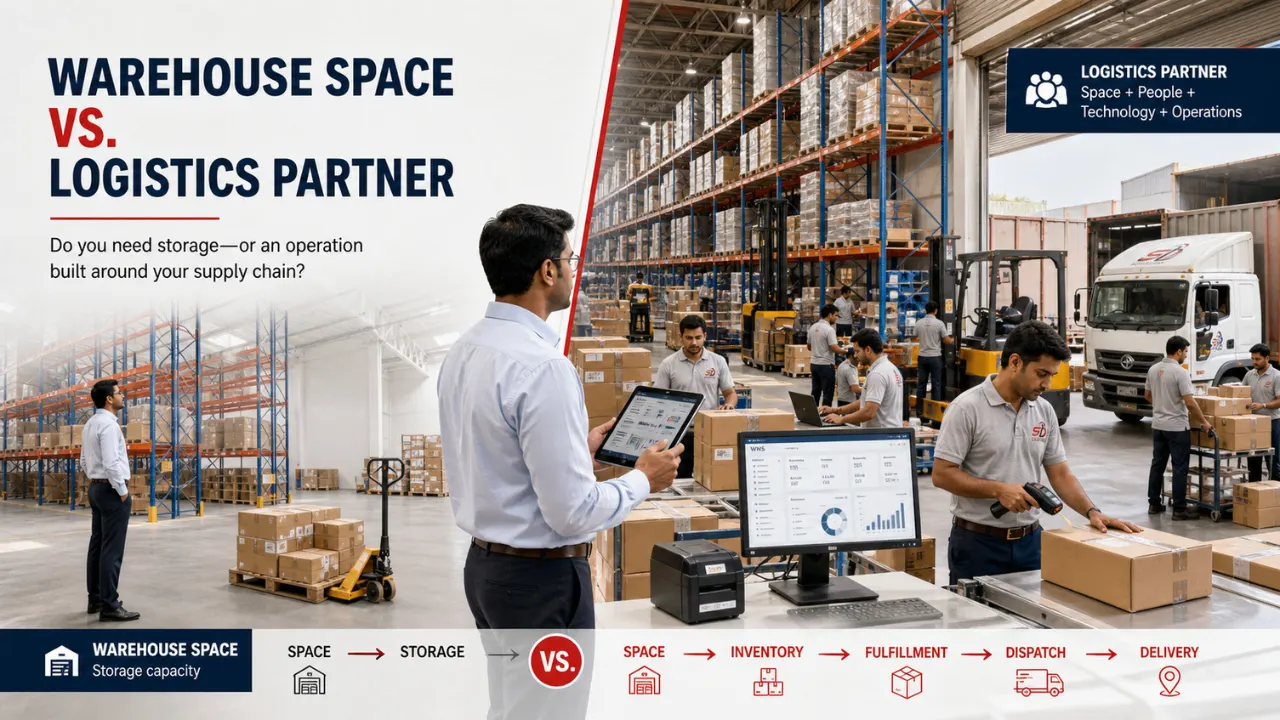

Hiring a warehouse gives your business a place to store inventory. With the hire of a logistics partner, you have the people, process, technology, fulfillment and expertise needed to effectively manage that inventory........
View Blog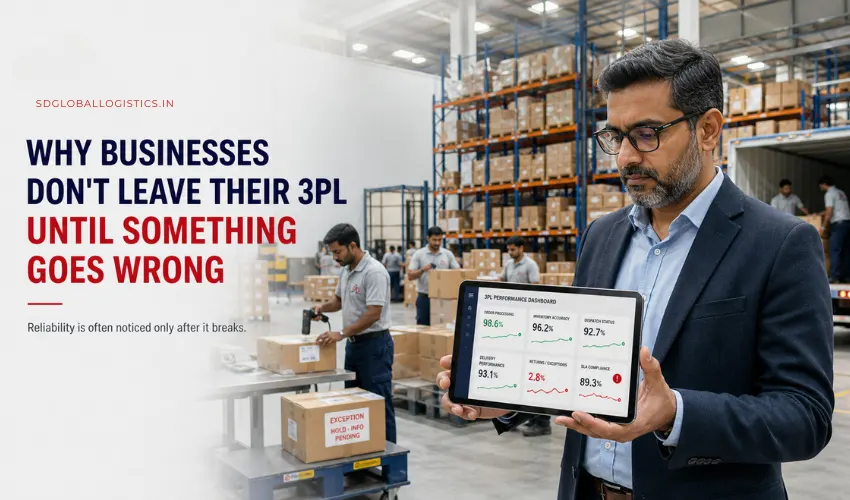
The reason many businesses remain with the same 3PL is that it is actually challenging to change warehouses, systems, processes, inventory, and transportation partners.When problems begin to impact customers, costs....
View Blog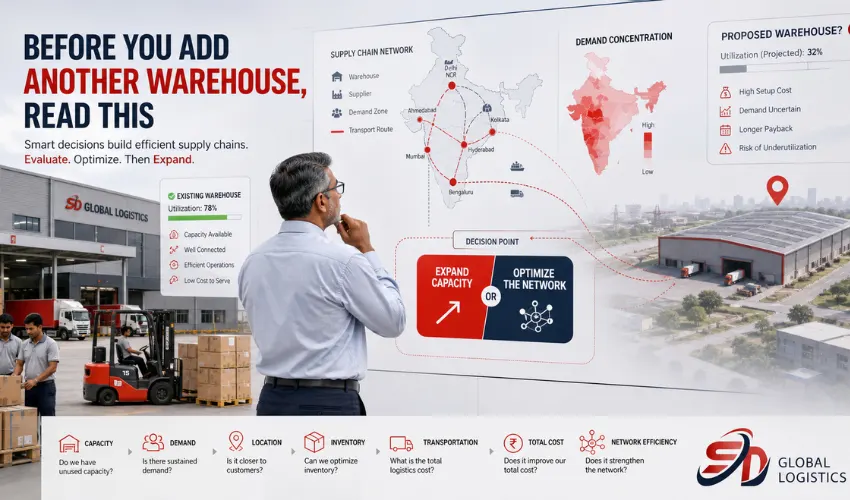
The answer is not always to build another warehouse. Before making a decision on an expansion, companies should look at true capacity utilization, inventory location, customer distribution, transportation costs, operational efficiency....
View Blog75+ warehouse locations positioned across major industrial, commercial and distribution markets.
Marcus
Ask me anything, I am here to help you.