Why One Warehouse may not be Enough for a Growing Business
For a company with a small geographic area it is perfectly logical to have one warehouse. But as customers spread across cities and states, that one location quietly becomes a bottleneck — not because it is poorly run, but because geography has outgrown it.
Here is what typically starts to break down:
Longer delivery distances
Each order is shipped cross-country and requires time and freight expense.
Higher last-mile expenses
Long-distance freight is more difficult to manage and always more expensive
Slower delivery timelines
Customers in Mumbai waiting on stock sitting in Delhi is a service failure, not a logistics hiccup
Single point of failure
One facility disruption affects every customer across every region
The problem is not the warehouse itself. It is the assumption that one location can serve everywhere efficiently as the business scales.
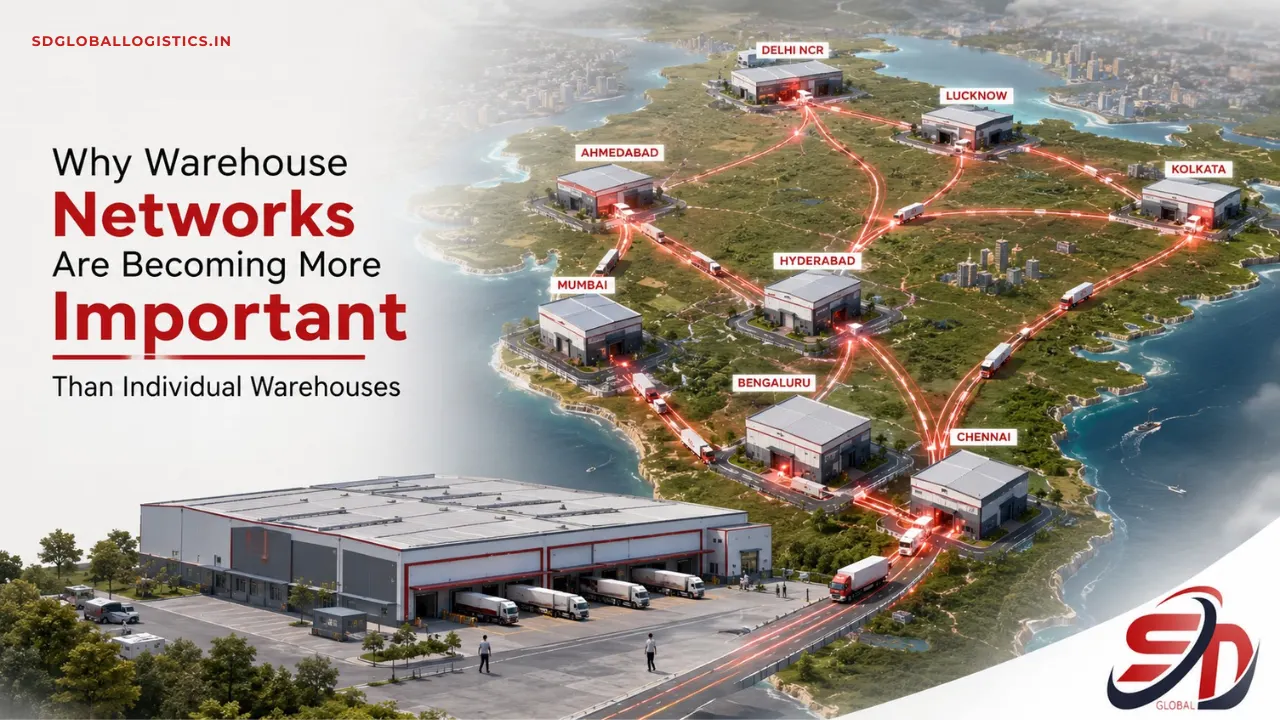
How Multi-City Warehousing Brings Inventory Closer to Customers
Multi-location warehousing works on one straightforward principle — position stock where demand is concentrated, not where the business first set up operations.
Instead of one large hub attempting to serve all markets, inventory is distributed across regional nodes, each serving a defined geography.
A typical Pan-India warehousing structure looks like this:
What this structure actually changes:
- • Shorter physical distance between stock and the end customer
- • Faster and more predictable delivery timelines
- • Reduced dependence on long-haul freight corridors
- • Stronger, more consistent service levels across competitive markets
One critical point to understand: The goal is not to split inventory equally across every node. It is about inventory positioning — holding the right SKUs in the right locations based on actual regional demand patterns, not operational convenience.
Why Warehouse Networks Improve Regional Distribution
A well-designed warehouse network does not just speed up delivery — it changes the structure of distribution itself.
Key operational improvements include:
SKU-level separation
Fast-moving items stocked at every regional hub; slow-moving or bulky SKUs consolidated centrally to reduce duplication costs
Disruption resilience
If one node faces delays, other locations absorb the pressure without a full-service breakdown
Shorter cold chains
Particularly relevant for FMCG, pharma, and perishable categories where product quality depends on reducing transit time
Sharper regional forecasting
Demand data becomes more location-specific over time, improving inventory accuracy
From a supply chain management perspective, this separation of high-velocity and low-velocity stock reduces working capital tied up in duplicated inventory while still delivering genuine geographic coverage.
The Real Costs of Running Multiple Warehouses
This is where most planning conversations go wrong.
More warehouses do not automatically mean a better supply chain. Every additional node introduces real cost and operational complexity that must be evaluated honestly before committing.
What becomes more expensive:
- Rent, infrastructure, and utilities at each additional location
- WMS technology systems or licenses replicated across facilities
- Staffing, management, and training requirements per node
- Safety stock held at multiple locations multiplies working capital requirements significantly
What becomes more complex:
- Inter-warehouse transfers Rebalancing stock across nodes adds both time and cost when demand shifts unexpectedly
- Reverse logistics Without a clear returns routing policy across the network, reverse logistics costs rise quickly and processing slows down
- Inventory visibility Tracking stock accurately across multiple locations requires stronger systems and tighter operational discipline
The most common mistake: Choosing warehouse locations based on real estate availability or convenience rather than actual customer concentration data. A poorly planned network amplifies costs at every node rather than reducing them.
When a Single Warehouse Still Makes More Sense
Not every business needs a network. Here is an honest assessment of both situations:
A single warehouse remains the right choice when:
- The majority of customers are concentrated within one city or region
- Products are high-value, low-volume, or highly customized
- Order frequency is low and delivery timelines are not a competitive differentiator
- The business is at an early stage and still building consistent demand volumes
Multi-location warehousing becomes worth evaluating when:
- Orders are arriving consistently from multiple states or cities
- Customers expect delivery within one to three days across wide geographies
- Long-distance freight costs are visibly compressing margins
- The business is actively scaling toward Pan-India distribution
Early-stage D2C and ecommerce brands are generally better served starting with a single, well-managed facility — often through 3PL warehousing or contract warehousing — before expanding based on actual demand data rather than projected growth.
How to Design a Warehouse Network the Right Way
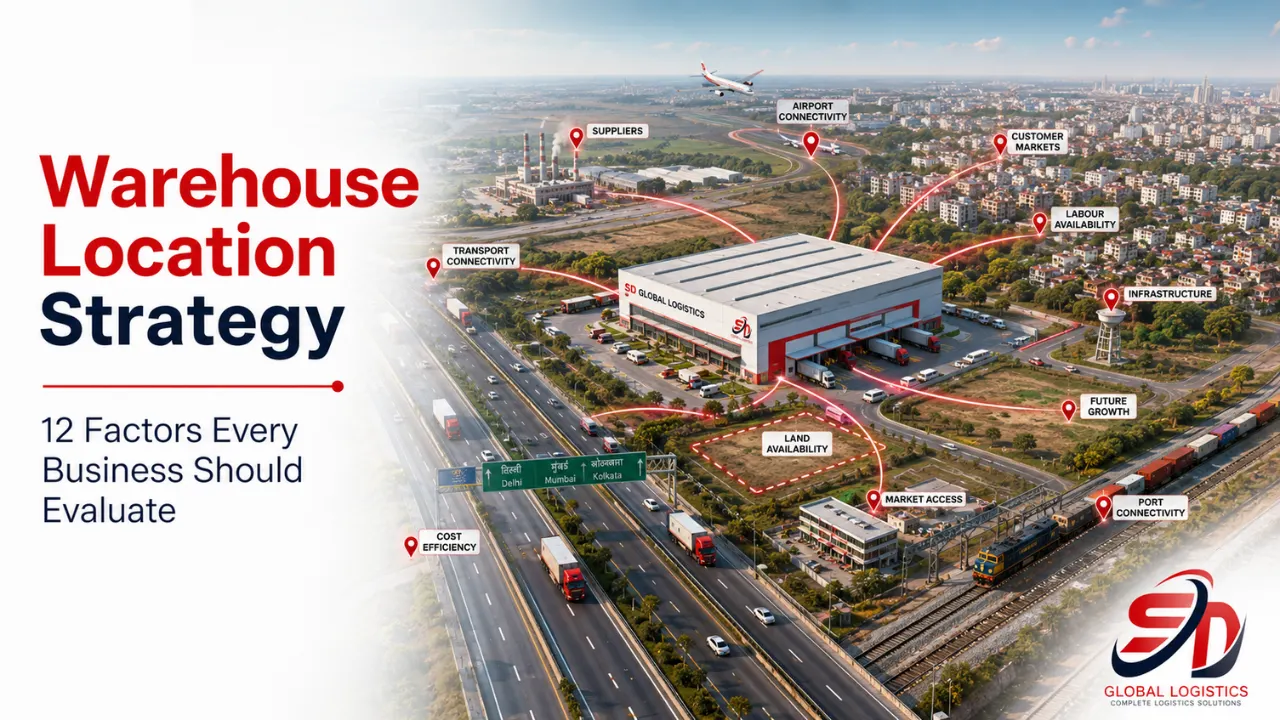
Network design should always start with customer data — not logistics assumptions or real estate opportunity.
A Practical Decision Framework:
Map Order Geography
Identify where orders are actually coming from, by volume and frequency.
Analyse Demand Density
Determine which cities or regions justify a dedicated node.
Review Your SKU Mix
Identify which products move fast regionally and which move slowly.
Define Service-Level Targets
Be specific about delivery commitments by market before deciding on locations.
Plan reverse logistics from the start
How returns route through the network needs a clear answer before the network goes live.
Build in Scalability
Design for growth, not just for current order volumes.
Where 3PL Providers Add Practical Value:
Working with an established third-party logistics services provider allows businesses to test regional nodes using existing infrastructure before committing to long-term leases. It also provides real inventory movement data, measurable service improvements, and the flexibility to scale up or down based on actual demand rather than forecasts.
The Strategic Question Has Changed
For businesses serving customers across multiple geographies, the question is no longer only:
"How much warehouse space do we need?"
It is increasingly:
"Where should inventory be positioned across the network — and why?"
A well-designed warehouse network strategy can improve delivery performance, reduce freight dependency, and build genuine supply chain resilience. But it only delivers those outcomes when location decisions are driven by where customers are, what products are moving, how frequently they order, and how inventory flows through the system.
The businesses that get this right treat network design as a strategic decision. Not a real estate one.