

Marcus
Ask me anything, I am here to help you.
Enquiry Form
Enquiry Form
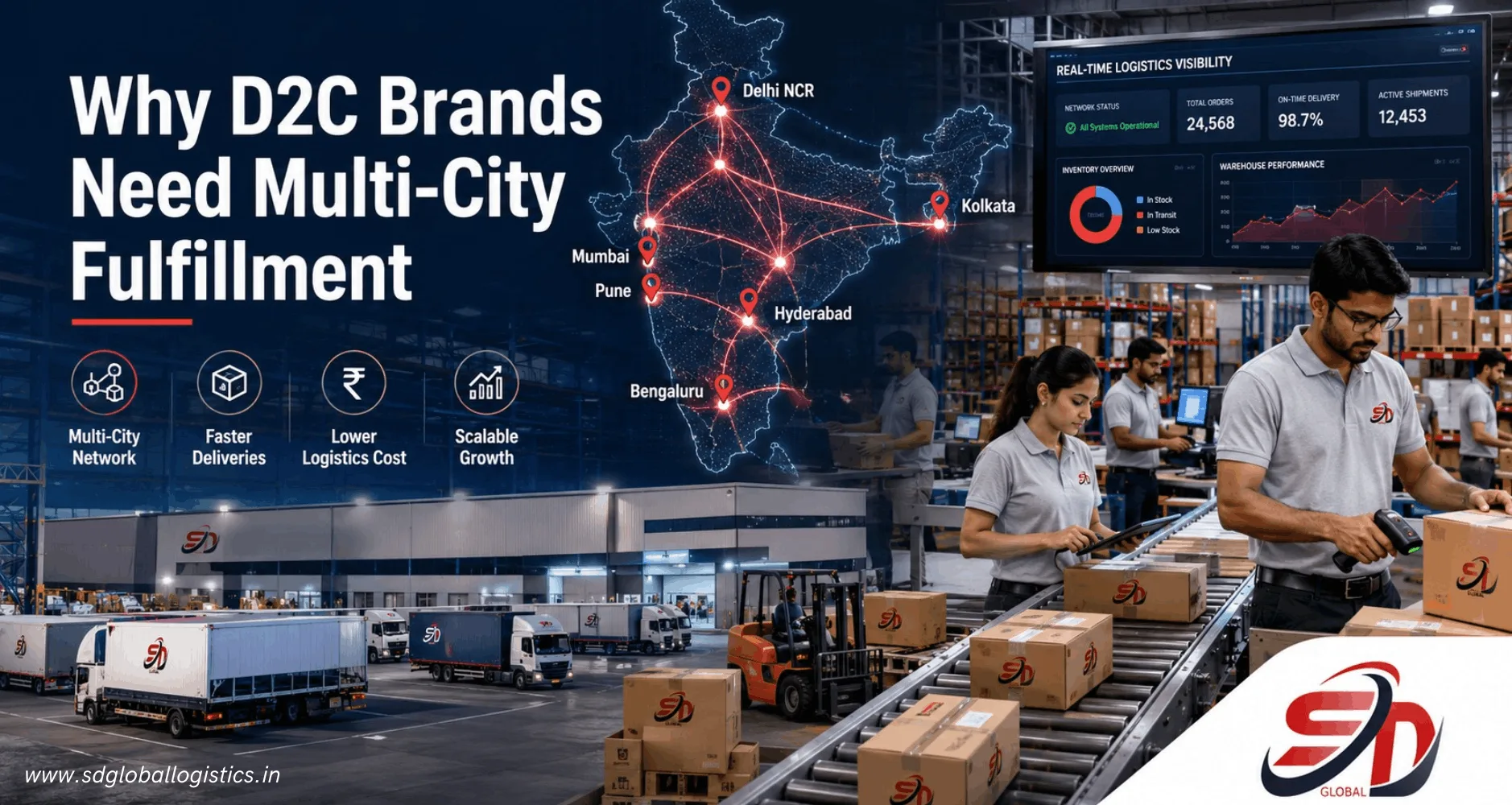
India's Direct-to-Consumer (D2C) revolution is no longer a gentle ripple - it has become a tidal wave. The India D2C e-commerce market, valued at $108.76 billion in 2026, is forecasted to grow to $322.1 billion by 2031, at a CAGR of 24.30%. However, such tremendous growth brings an unsettling reality: if your fulfillment is not up to the mark, your brand will not rise either. This is the very reason why multi-city fulfillment for D2C brands has transitioned from being a "nice-to-have" feature to a downright operational necessity.
Whether you're a bootstrapped skincare startup or a funded fashion label scaling fast, the logistics decisions you make today will determine whether you thrive or merely survive. Let's unpack why distributing your inventory across multiple cities is the smartest move you can make right now.
Imagine: your D2C brand runs a single warehouse in Delhi. A customer in Bengaluru orders on Monday night. The package is not dispatched until Tuesday; it then travels across the country for three to four days, and the package comes, if all goes well, by Friday.
On the other hand, consumers that used to be okay with waiting for deliveries for 5–7 days now expect their orders within hours, and quick commerce platforms have set the bar so high that it is almost impossible for traditional centralized warehousing to catch up.
Shipping from a single hub result in extended transit times, increased freight costs, and a higher number of return-to-origin (RTO) cases. For D2C companies, a single late delivery means potentially one lost customer, and with the fact that 80% of consumers refuse to shop with a company again after one bad experience, one can only imagine how high the stakes are here.
Multi-city fulfillment, also known as distributed warehousing, is a concept whereby you keep your stock in fulfillment centers located in multiple cities instead of a single central location. The stock is kept in several warehouses or micro fulfillment centers near your final customers. Rather than dispatching from a single warehouse in Mumbai to a customer in Bangalore, you have products in fulfillment centers in both cities.
Once an order is placed, the system automatically directs the order to the warehouse that is closest to the customer, thus guaranteeing the shortest delivery time. This is the method that is used by the top ecommerce fulfillment services - and it is also the backbone of every successful third-party logistics partner in India today.
You don't need warehouses in 15 cities on day one. A smart, phased approach works best:
Today, the concept of a single-warehouse fulfillment methodology is entirely out of date. As the customers’ standards become higher, the delivery schedules become shorter, and the competition gets fiercer, multi-city fulfillment for D2C brands is the infrastructural advantage that separates scalable businesses from struggling ones.
The brands winning in 2026 and beyond won't necessarily be the biggest or best-funded. They'll be the ones that understand logistics as a competitive advantage and partner with technology platforms that make speed, accuracy, and cost-efficiency achievable goals.
From growing businesses to established enterprises, companies rely on SD Global Logistics to manage critical warehousing and logistics operations.











" We struggled with inconsistent inventory handling until SD Global stepped in with dedicated warehousing and tight process control. Their attention to detail brought stability to our entire supply chain. "
" Reverse logistics was a major pain point for us. With SD Global’s reverse logistics management and WMS integration, we finally got the visibility and efficiency we needed. "

" As a growing startup, flexibility was key. SD Global’s on-demand warehousing and responsive support scaled with us without locking us into rigid contracts. "

" Order delays used to slow us down. Thanks to SD Global’s order fulfillment and B2B logistics, we’re now running faster and more reliably than ever. "

" Our nationwide expansion needed a reliable network. SD Global’s Pan-India 3PL and shared warehousing model gave us the reach and agility we were missing. "
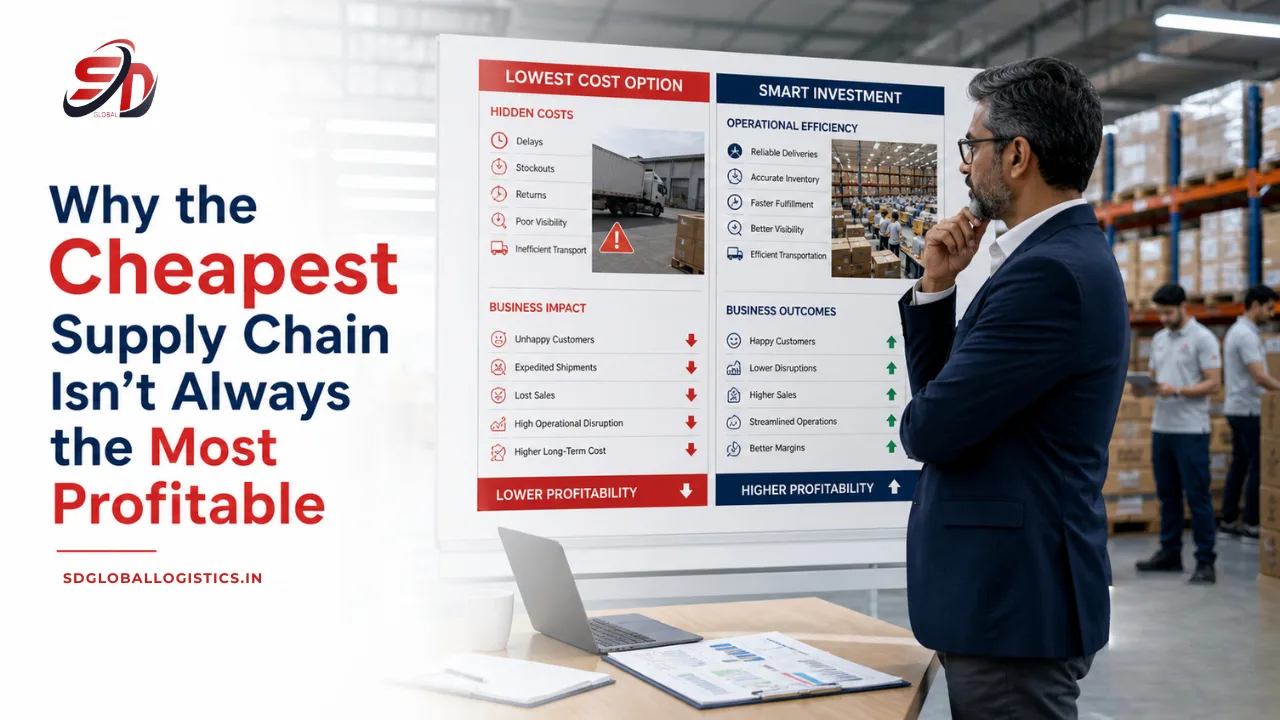

The cheapest supply chain is not always the most profitable — because cutting costs in one area almost always creates higher costs somewhere else. A low-cost warehouse in a remote location adds cos.....
View Blog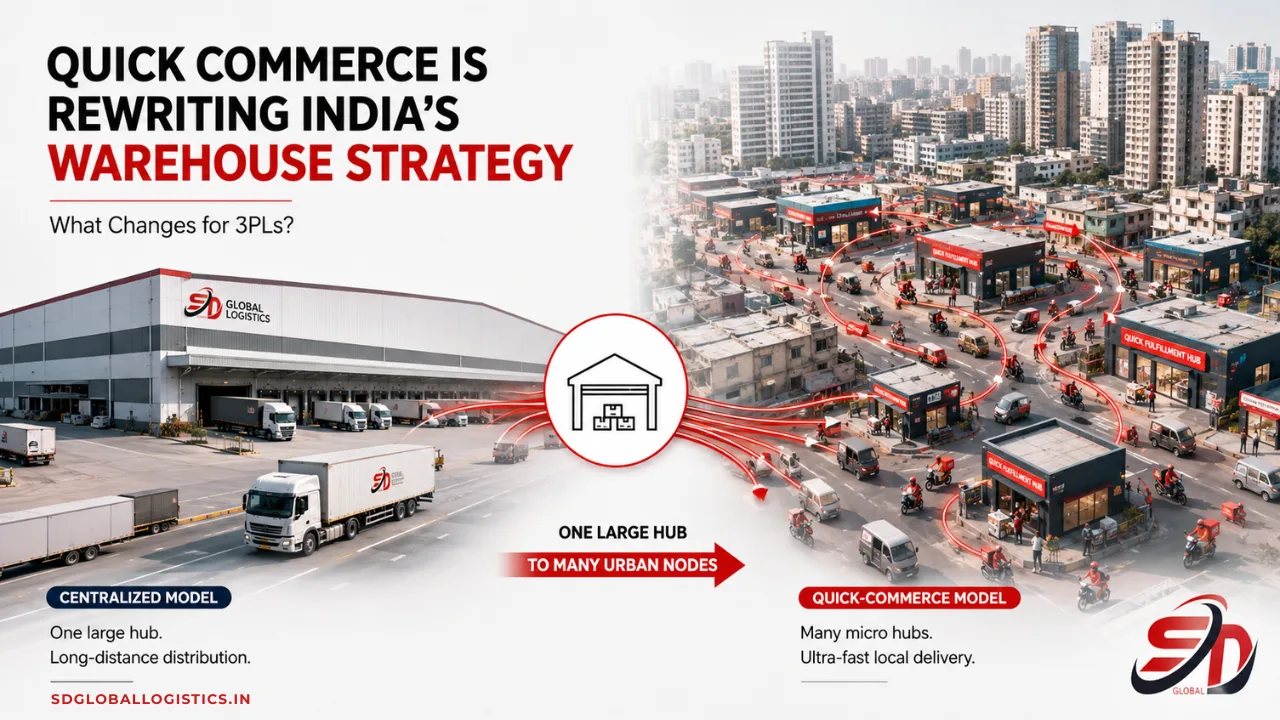
Quick commerce is pushing businesses away from centralised warehousing toward faster, more distributed fulfilment networks — and it is changing everything about how 3PLs manage inventory, locations....
View Blog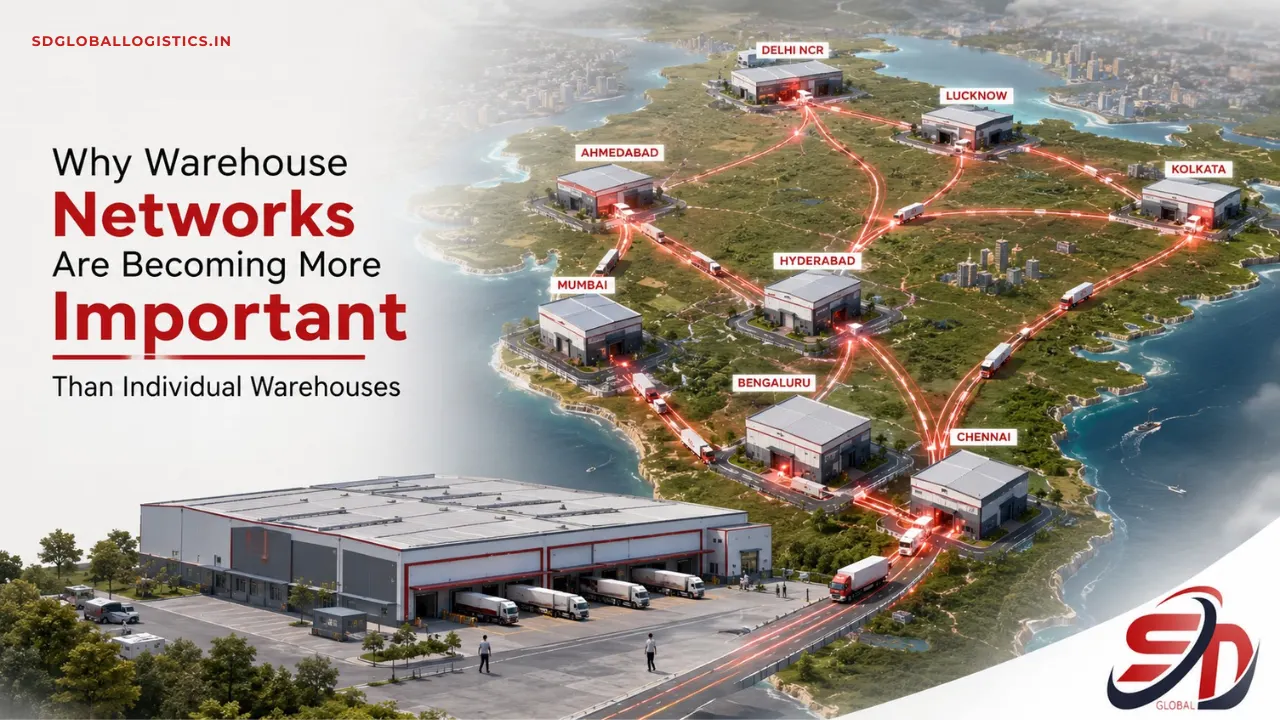
The Core Shift: A warehouse network provides businesses with the ability to locate stock closer to several customer and demand centres, optimising the delivery process, minimising long-distance....
View Blog75+ warehouse locations positioned across major industrial, commercial and distribution markets.
SD Global Logistics — your pan-India partner delivering scalable warehousing, technology-driven supply chain solutions and reliable, cost-efficient logistics for growing businesses
Developed By Rapiditors Technology India Pvt Ltd © 2025. All rights reserved.
Marcus
Ask me anything, I am here to help you.