

Marcus
Ask me anything, I am here to help you.
Enquiry Form
Enquiry Form
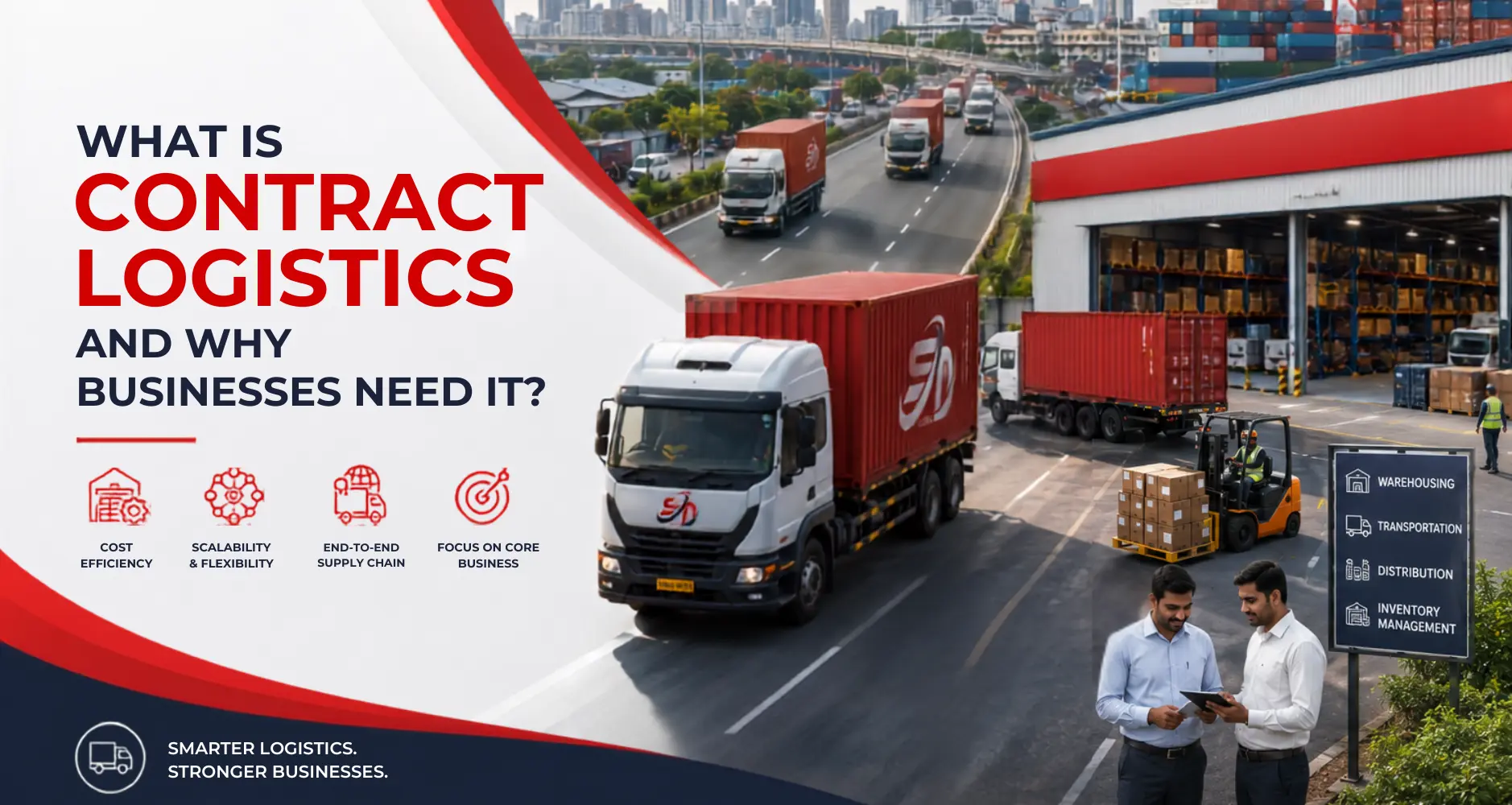
In today's fast-changing Indian business environment, e-commerce is growing rapidly and supply chains are getting longer as they connect big city centers with small town and rural areas. It is becoming very hard for companies to handle their logistics entirely on their own. That is the main reason why contract logistics has become very popular. Companies can outsource the experts who handle warehousing, transporting, stock keeping, and order fulfillment on a long-term basis and continue focusing on their main business activities—expanding their business.
From an eCommerce brand that has to manage the unexpected surge during festive seasons to the manufacturer who needs to move goods across states to the retailer looking to expand its business across the nation, contract logistics is a smarter choice of business.
In this guide, we’ll break down exactly what it means, how it works, and why more Indian businesses are turning to third-party logistics solutions (also known as 3PL services) to reduce complexity, control costs, and scale faster.
Contract logistics is a strategic, long-term outsourcing model where a business hands over part or all of its supply chain operations to a specialized logistics partner. It is not a one-off shipping arrangement but a properly documented contract that in most cases lasts several years and covers various integrated services such as:
The logistics partner is not going to be simply carrying out the agreed tasks, but they will be improving the whole of your operations by making use of their knowledge, infrastructure, and IT systems.
It's like having an entire department in your company devoted to a supply chain, but without having to have to build and run it. Your logistics partner becomes an extension of your team, working towards the same business objectives, with common KPIs, technology platforms and performance reviews.
The process typically follows a structured yet flexible approach:
For an Indian eCommerce fashion brand, this might mean storing inventory in regional hubs near major cities, fulfilling orders within 24-48 hours even during Diwali sales, and managing reverse logistics for easy returns—without the brand owning a single warehouse.
India’s logistics sector is expanding rapidly. In 2025, the total market is estimated to be around USD 244 billion, climbing to more than USD 429 billion by 2034. In this, the contract logistics business is expanding at a good pace at an estimated USD 22 billion by 2026 with a CAGR of more than 7%.
Several factors drive this shift:
By embracing third-party logistics solutions, businesses convert capital expenditure into operational expenditure, free up cash flow, and gain access to advanced technology and best practices they couldn’t develop internally.
Working with a reliable logistics partner delivers advantages that go far beyond simple outsourcing:
Many companies still experience 15-30% saving in logistics costs while upgrading service levels—a potent duo for competing in Indian markets.
Contract logistics is not confined to one industry. It is used by manufacturers to speed up the movement of the new products to the retailers and exporters. E-commerce and D2C (direct to consumer) brands depend greatly on fulfillment services to handle erratic changes of the market demand. Retailers and FMCG companies manage inventories at different locations more efficiently by integrating their operations, while automotive and pharmaceutical firms benefit from specialized handling, temperature-controlled warehouse services, and compliance support.
Even fast-growing startups recognize that a reliable logistics partner can help them to compete with larger players without massive upfront investment.
Choosing the Right Logistics Partner in India
Not all providers are equal. Look for a partner with:
Don't make your decision just on price—consider reliability, innovation, and cultural fit. A real partner will become part of your growth.
Contract logistics has evolved from a cost-cutting measure into a strategic advantage. In India’s fast-growing economy, where infrastructure improvements, National Logistics Policy initiatives, and digital adoption are reshaping supply chains, businesses that embrace 3PL services and third-party logistics solutions gain agility and competitiveness.
By outsourcing to experts in warehouse services, fulfillment services, and end-to-end management, companies reduce operational headaches, lower risks, improve customer experiences, and accelerate growth. The result? More time and resources are available for innovation, extending the product portfolio, and entering new markets.
From growing businesses to established enterprises, companies rely on SD Global Logistics to manage critical warehousing and logistics operations.













" We struggled with inconsistent inventory handling until SD Global stepped in with dedicated warehousing and tight process control. Their attention to detail brought stability to our entire supply chain. "

" Reverse logistics was a major pain point for us. With SD Global’s reverse logistics management and WMS integration, we finally got the visibility and efficiency we needed. "

" As a growing startup, flexibility was key. SD Global’s on-demand warehousing and responsive support scaled with us without locking us into rigid contracts. "

" Order delays used to slow us down. Thanks to SD Global’s order fulfillment and B2B logistics, we’re now running faster and more reliably than ever. "

" Our nationwide expansion needed a reliable network. SD Global’s Pan-India 3PL and shared warehousing model gave us the reach and agility we were missing. "
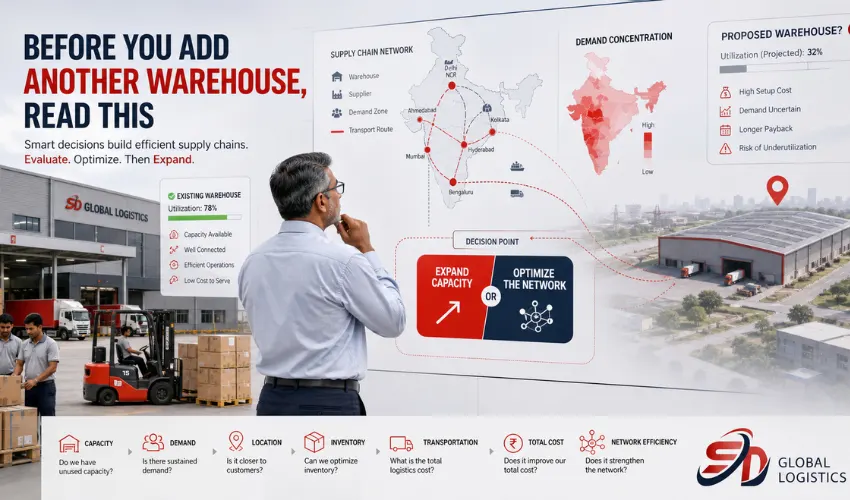

The answer is not always to build another warehouse. Before making a decision on an expansion, companies should look at true capacity utilization, inventory location, customer distribution, transportation costs, operational efficiency....
View Blog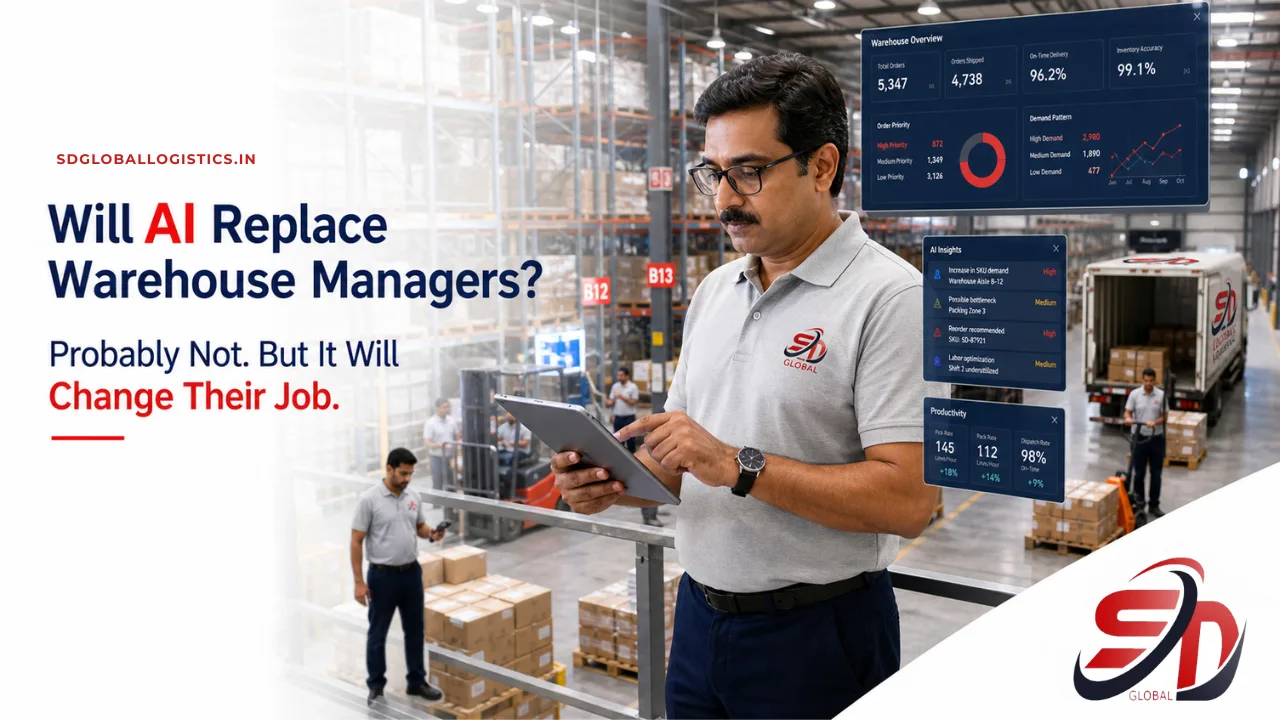
Warehouse managers will not be replaced by AI. Human judgment, leadership, exception handling and real-time coordination are still required in warehouses.But AI will be making more routine decisions — and get managers in the habit of data-driven management....
View Blog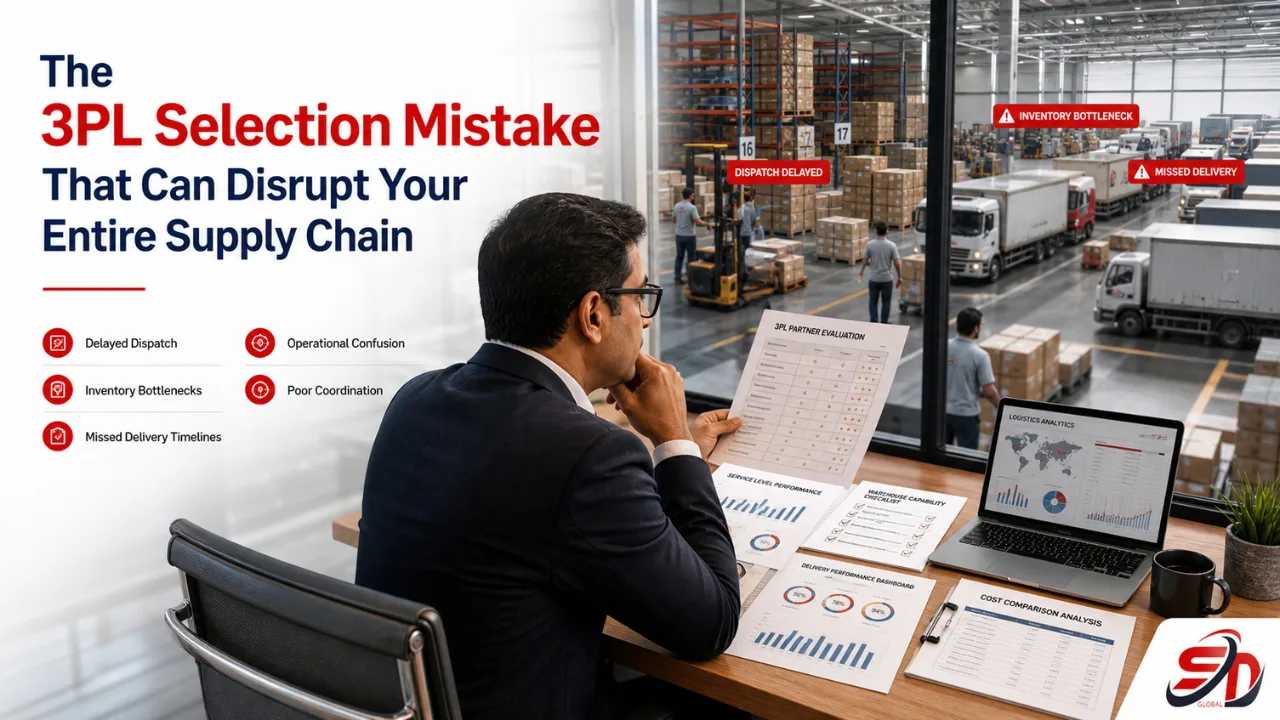
The most common error that companies make when choosing a 3PL is simply looking at the cost or warehouse capacity without assessing operational capability, technology, network, scalability, service levels and supply chain impact.
View Blog75+ warehouse locations positioned across major industrial, commercial and distribution markets.
Marcus
Ask me anything, I am here to help you.