

Marcus
Ask me anything, I am here to help you.
Enquiry Form
Enquiry Form
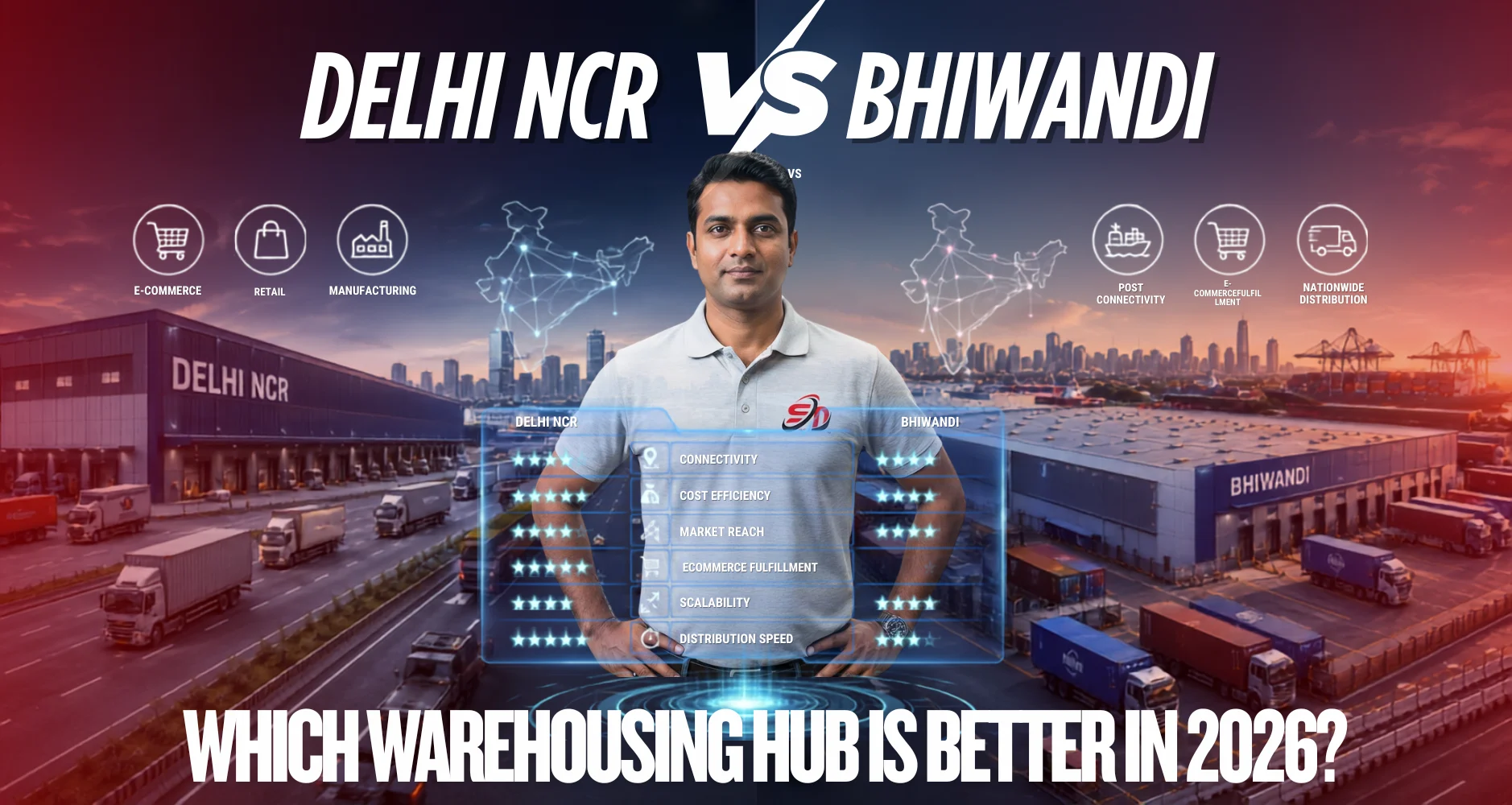
The Indian logistics sector is booming, driven by exploding eCommerce sales, manufacturing growth, and massive infrastructure upgrades. For businesses looking to optimize their supply chain, picking the right location for warehousing can make or break delivery speeds, costs, and customer satisfaction.
You might be wondering about the difference between warehousing in Delhi NCR and Bhiwandi, and you're not the only one. These two stand out among logistics hubs in India, serving very different regions and needs. Delhi NCR distributes power across the North, Bhiwandi is for Mumbai, imports and Western India. In this practical guide, we'll compare real costs, connectivity, pros and cons, and use cases to help you determine the best warehousing hub in India for your operations in 2026.
The Indian warehouse market is projected to be about USD 27.29 billion by 2026, driven by the rapid e-commerce growth, growing consumers' demand for speedy deliveries, and the almost completion of Dedicated Freight Corridors (DFC). Besides just storage, companies are now looking for state-of-the-art, technology-enabled buildings that are ready for automation, environmentally-friendly features, and multi-modal transportation options that are seamlessly connected.
That said, the choice between warehouse space in Delhi NCR and a warehouse in Bhiwandi directly affects your total logistics costs, inventory velocity, and ability to meet service-level agreements. A poor choice could lead to extended delivery times or a substantial rise in transportation costs. To assist you with that, let's understand the situation by providing clearest insights focused on making a decision.
Delhi NCR—including Gurgaon, Noida, Faridabad, Sonipat, and areas like Palwal and Bhiwadi—continues to lead as a major destination for industrial warehousing India. Strong absorption was achieved in the region in 2025 (approximately 13 million sq ft) by the 3PL operators, eCommerce, FMCG and consumer durables.
Prime locations command rents of roughly ₹22–30 per sq ft per month. Traffic congestion can slow operations, and prime space is becoming scarcer, pushing newer developments farther out. On the other hand, peripheral NCR locations often provide better value for larger footprints.
For ecommerce warehousing in India with heavy Northern demand, warehousing in Delhi NCR frequently delivers strong results.
Bhiwandi has developed into one of the largest warehousing clusters in Asia. It was the micro-market leader of absorption in several 2025 reports, with very high leasing volumes, in particular about 3.1 million sq ft in the first half of the year in the Mumbai region), from quick commerce, retail replenishment, and import-dependent players.
Serving Northern markets from here increases road transit time and cost. Some zones still face seasonal issues like flooding, though modern parks are mitigating these.
If your line of work is hugely dependent on imports, port logistics or Western and Southern demand, then a warehouse in Bhiwandi (serving as a key warehouse in Mumbai alternative) is the best commercial decision a company can make in that case.
Rental Costs and Availability: Delhi NCR typically ranges ₹18–28/sq ft/month (lower outside core Gurgaon), with healthy new Grade A supply. Bhiwandi often falls in the ₹20–30 range but frequently offers better value for large-scale or high-volume users through economies of scale and lower ancillary costs.
Connectivity and Reach: Delhi NCR wins for Northern hinterland, air cargo, and pan-North distribution. Bhiwandi dominates for port-led imports, Western highways, and faster access to Mumbai/Pune markets. Both gain from DFC completion, which is slashing transit times between major corridors.
Labor, Infrastructure, and Operations: Bhiwandi boasts a highly skilled logistics workforce. Delhi NCR offers broader talent but can see higher wage pressure in prime pockets. In both, modern facilities place a higher priority on automation readiness, IoT visibility, and green features—critical for corporate sustainability goals.
Risks and Scalability: Delhi NCR is confronted with the shortage of land and the problem of traffic congestion in the core areas. Bhiwandi has to face the issue of high competition and maintaining the infrastructure in the old pockets, however, the standards are being raised by the new developments at a fast pace.
There is no universal best warehousing hub in India—the right answer depends on data, not trends.
Opt for warehousing in Delhi NCR (or a warehouse in Gurgaon): if your sales are concentrated in the North, you ship high-value or time-sensitive goods by air, or you need proximity to Northern manufacturing clusters. It supports strong SLAs for Northern customers and works well for many industrial and FMCG players.
Choose a warehouse in Bhiwandi: if you handle imports through JNPT, target Mumbai and Western/Southern consumption, or manage high-volume retail and quick commerce. It often lowers total landed costs for port-dependent or Western-heavy supply chains.
Hybrid Approach: Currently, many companies have a single main hub in one area complemented by spokes or secondary sites in another. This hub-and-spoke approach ensures pan-India presence while cutting down on costs and speeding up delivery. Review your order data honestly. If 60%+ of demand is Northern, lean toward Delhi NCR. For coastal or import-heavy flows, Bhiwandi usually wins on efficiency.
The two locations share the prospect of taking multiplicative advantage of full DFC operations, new multi-modal parks, expressway upgrades, plus heightened institutional investment in Grade A space. Also, anticipate faster introduction of automation, real-time visibility tools, sustainable building methods (solar, EV charging, rainwater harvesting), and data-driven warehouse management.
Ecommerce warehousing in India and industrial warehousing India will continue shifting toward smarter, more flexible facilities. Companies that pair the right geography with technology and strong 3PL partnerships will gain a clear edge as overall logistics costs trend downward.
At the end of the day, whether you select warehousing in Delhi NCR for its Northern reach or a warehouse in Bhiwandi for Western efficiency and port access, success depends on how well the location aligns with your target markets, product profile, volume, and growth plans. The best warehousing hub in India is the one that reduces your total cost of ownership while improving delivery reliability and scalability.
At SD Global Logistics, we provide flexible warehouse space in Delhi NCR, strategic facilities near Bhiwandi, integrated 3PL services, network optimization, and turnkey solutions across both hubs. Our team analyzes your actual data, models different scenarios, and recommends the mix that best supports your 2026 objectives—whether single-hub, dual-hub, or multi-location.
Ready to strengthen your supply chain? Contact the SD Global Logistics team today for a no-obligation consultation. We’ll help you choose wisely, implement efficiently, and stay ahead in India’s dynamic logistics landscape.
From growing businesses to established enterprises, companies rely on SD Global Logistics to manage critical warehousing and logistics operations.














" We struggled with inconsistent inventory handling until SD Global stepped in with dedicated warehousing and tight process control. Their attention to detail brought stability to our entire supply chain. "

" Reverse logistics was a major pain point for us. With SD Global’s reverse logistics management and WMS integration, we finally got the visibility and efficiency we needed. "

" As a growing startup, flexibility was key. SD Global’s on-demand warehousing and responsive support scaled with us without locking us into rigid contracts. "

" Order delays used to slow us down. Thanks to SD Global’s order fulfillment and B2B logistics, we’re now running faster and more reliably than ever. "

" Our nationwide expansion needed a reliable network. SD Global’s Pan-India 3PL and shared warehousing model gave us the reach and agility we were missing. "
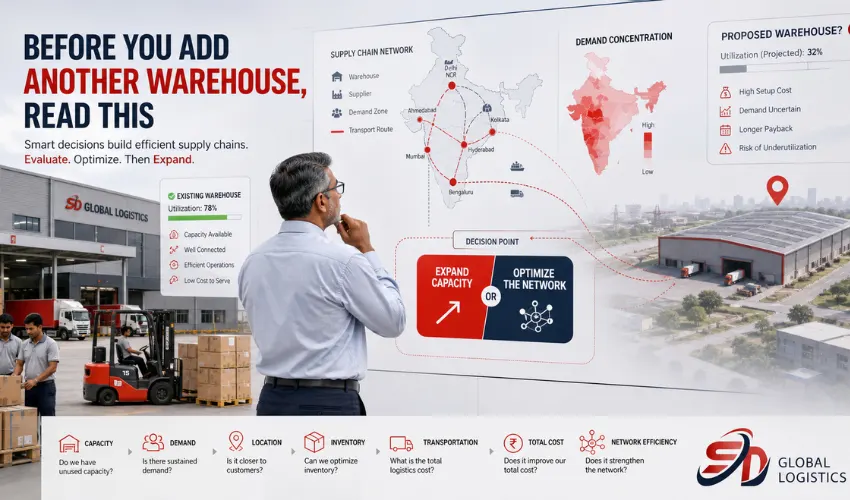

The answer is not always to build another warehouse. Before making a decision on an expansion, companies should look at true capacity utilization, inventory location, customer distribution, transportation costs, operational efficiency....
View Blog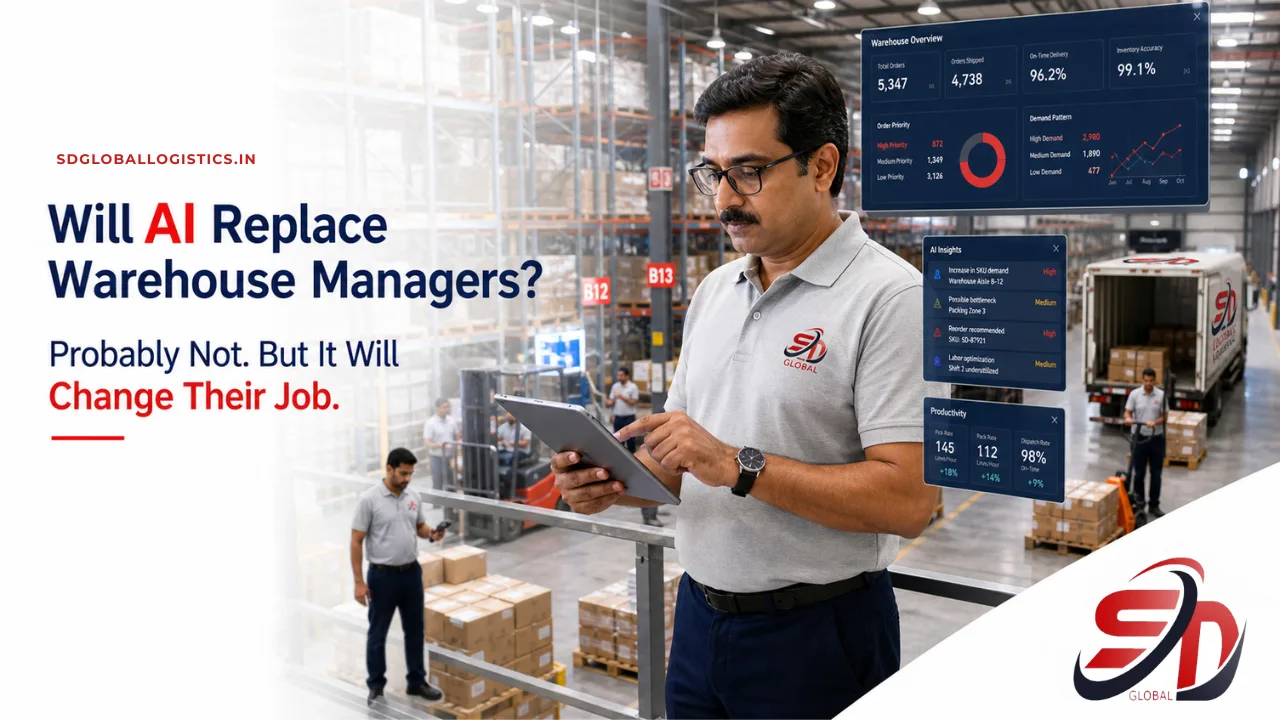
Warehouse managers will not be replaced by AI. Human judgment, leadership, exception handling and real-time coordination are still required in warehouses.But AI will be making more routine decisions — and get managers in the habit of data-driven management....
View Blog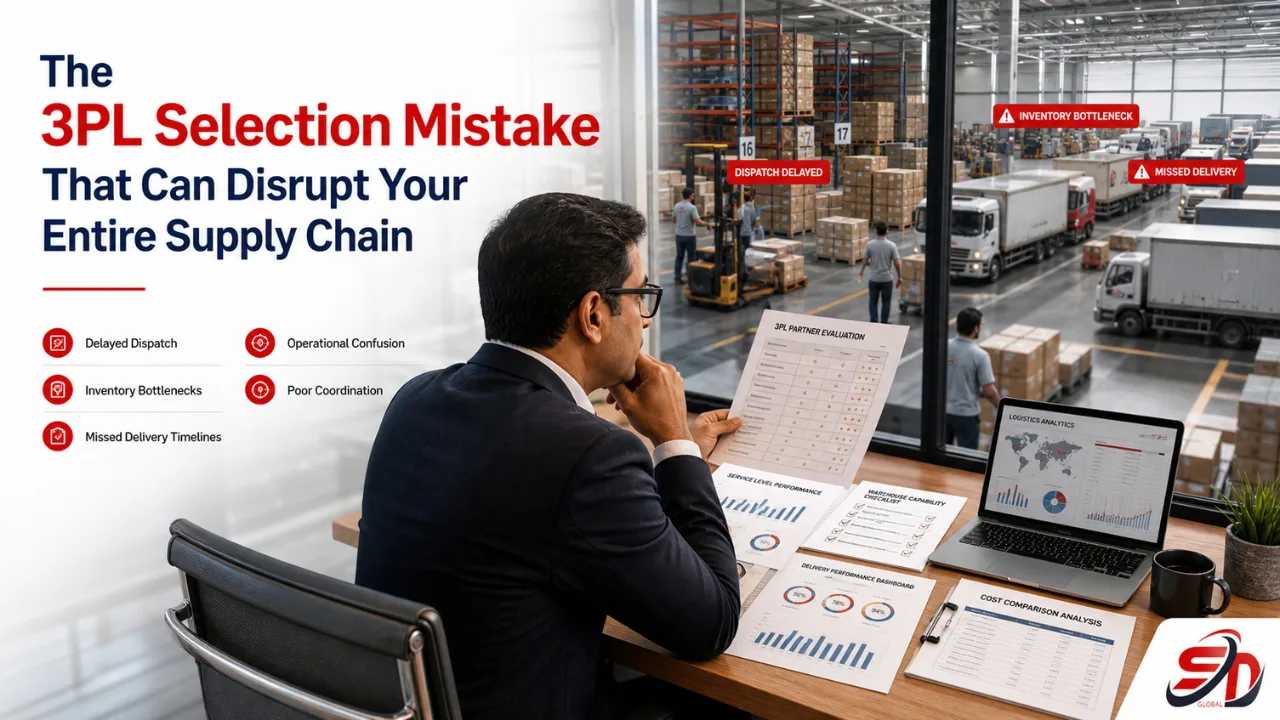
The most common error that companies make when choosing a 3PL is simply looking at the cost or warehouse capacity without assessing operational capability, technology, network, scalability, service levels and supply chain impact.
View Blog75+ warehouse locations positioned across major industrial, commercial and distribution markets.
Marcus
Ask me anything, I am here to help you.