

Marcus
Ask me anything, I am here to help you.
Enquiry Form
Enquiry Form
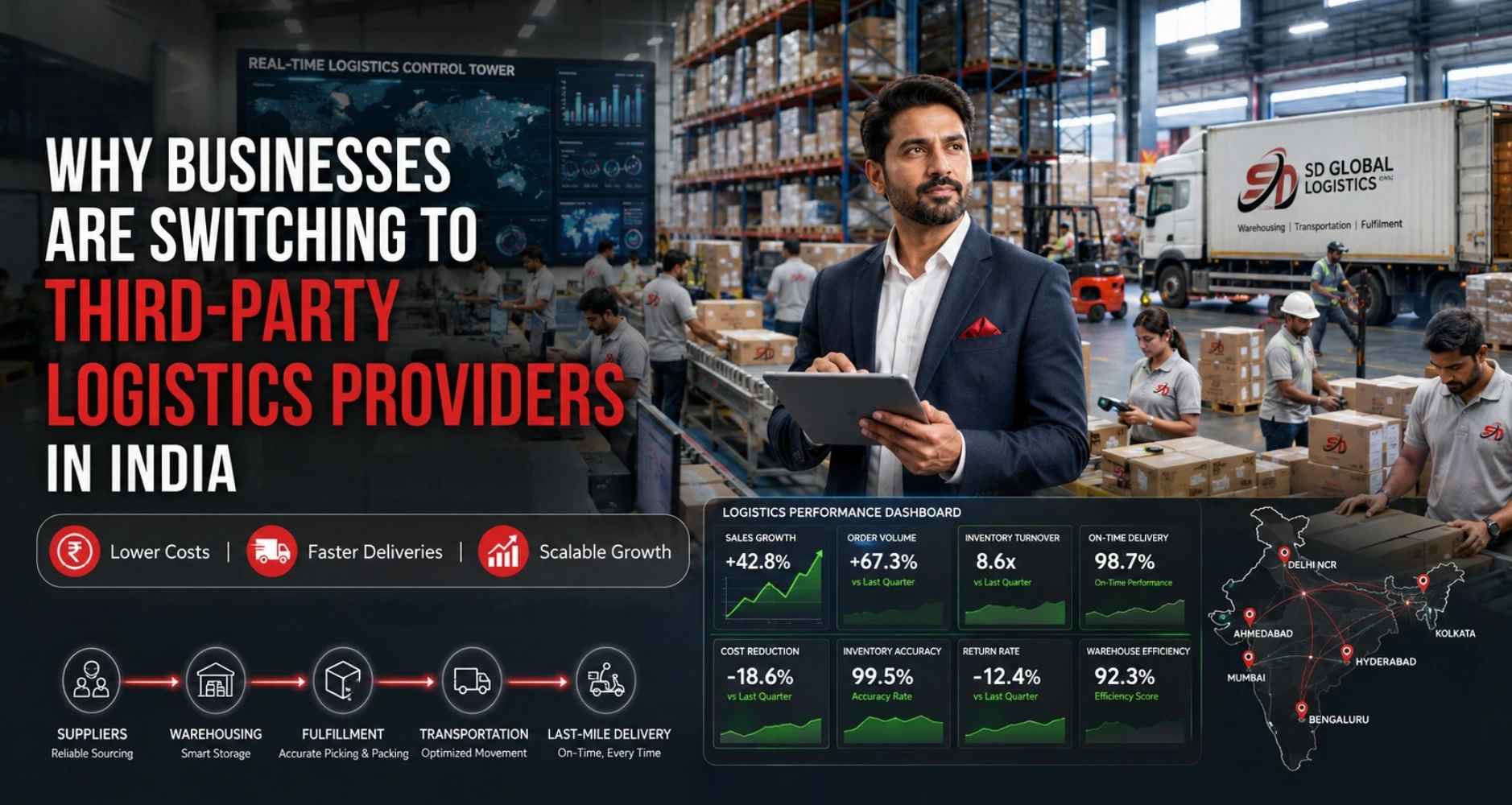
The Indian supply chain is undergoing rapid transformation, and so are the expectations of all businesses that deal with the movement of goods across this vast land. As customers demand more and more, distribution systems grow more complicated and companies face ever-greater cost pressures, they must rethink logistics management. That's exactly why an increasing number of manufacturers, retailers, and e-commerce brands are now turning to third-party logistics providers for a competitive edge.
India's logistics spending equated to roughly 8.35% of GDP and although this ratio is trending up, it is still a heavy burden on enterprises, particularly small and mid-sized enterprises. Smaller enterprises face much higher logistics cost, a recent study conducted by DPIIT-NCAER has pointed out, this has a direct impact on their capacity to scale up and compete. Meanwhile, consumers nationwide are all demanding quicker deliveries, up-to-the-minute order tracking and perfect fulfillment. Meeting those expectations with an in-house operation requires capital, technology, and expertise that many companies simply cannot justify building from scratch.
This blog explores the forces driving India's shift toward 3PL services, the tangible business benefits, and how the right logistics service provider can become a powerful growth partner.
A third-party logistics provider (3PL) is an external partner that manages one or more logistics functions on behalf of a business. Third party logistics is the process of outsourcing logistics and distribution work to a third party logistics provider, who provides specific third-party logistics services such as inventory management, cross-docking, door-to-door delivery, and product packaging.
In practice, modern 3PL logistics companies go well beyond basic transportation. Their core services typically include:
Contract logistics services: dedicated or shared storage facilities
Warehousing and distribution services: pick, pack, ship, and regional distribution
Order fulfillment services: from receiving inventory to last-mile delivery
Warehouse management services: technology-driven inventory control
Transportation management: freight planning, carrier selection, and route optimization
Supply chain management solutions: end-to-end visibility, analytics, and strategic design
Within India's logistics ecosystem, 3PL providers serve as the operational backbone for companies that want to focus on their core business—product development, marketing, customer relationships—while leaving the complexity of movement, storage, and delivery to specialists. By outsourcing logistics and distribution activities, manufacturers can optimize costs related to warehousing, transportation, and overall supply chain management, allowing companies to concentrate on their core competencies.
The figures give a good reason to tell a story. The India 3PL market is expected to grow to approximately USD 38.74 billion by 2025 and is likely to attain USD 78.37 billion by 2035 at a CAGR of 7.30%. Some estimates project even steeper growth trajectories—IMARC Group reports the market reached USD 21.8 billion in 2024 and expects it to reach USD 77.0 billion by 2033, exhibiting a CAGR of 14.35%. Regardless of which estimate you reference, the direction is undeniable: third-party logistics services for growing businesses are in massive demand.
Several structural forces are fueling this growth:
National Logistics Policy and Government Initiatives: The NLP aims to reduce logistics costs to within 5% of GDP and improve India's global logistics rankings. Infrastructure development is happening at an unprecedented pace with the implementation of various schemes such as PM GatiShakti, Sagarmala and Dedicated Freight Corridors. India is witnessing infrastructure development such as dedicated freight corridors, free trade warehousing zones, logistics parks, and container freight stations, further accelerating 3PL market growth.
GST Reforms and Structural Simplification: The 2017 GST reform removed interstate barriers, that minimized checkpoint delays and led to a better optimization of logistics across the country. Initial findings from GST 1.0 indicated a 15.4% decrease in transport expenses across the country and more recent GST 2.0 reforms are driving further efficiencies in transport. Previously, companies operated small warehouses in each state to circumvent entry taxes. With GST, businesses shifted to consolidating storage into large regional centres, utilizing a hub-and-spoke distribution model.
E-Commerce and Digital Adoption: One of the reasons behind market growth is increased e-commerce penetration; other sectors such as automotive, energy, and the manufacturing industry have also increased the demand for logistics services. Besides, organized retail is expanding and more companies are adopting asset-light logistics model. India crossed 886 million active internet users in 2024, and that enormous digital population is shopping online at unprecedented volumes.
Understanding the macro trends is one thing. But what specifically motivates a business owner or supply chain leader to hand over logistics to an external partner? Here are the key reasons.
Reducing Logistics Costs and Improving Profitability
To be honest, this is usually the main reason and the strongest argument resulting from the use of third-party logistics (3PL) services. Fundamentally, how 3PLs manage to lower logistics expenses simply boils down to large-scale operations. By merging shipments from diverse clients, a 3PL firm can obtain the best freight rates and run warehouses at higher utilization—all advantages that a single business would struggle to achieve.
This outsourcing strategy also gives manufacturers increased flexibility by reducing overall costs associated with the distribution and warehousing of goods. instead of committing large sums of cash to buying vehicles, leasing warehouses, and maintaining tech infrastructure, businesses convert those fixed costs into variable expenses that flex with demand.
For a mid-sized manufacturer shipping to 15 states, for example, partnering with a 3PL can reduce per-unit logistics costs by consolidating regional shipments through hub-and-spoke networks rather than running point-to-point deliveries.
Access to Advanced Contract Warehousing Services:
Running a warehouse is much more complicated than renting a warehouse and putting goods on the shelves. Modern contract warehousing services involve climate control, racking systems, safety compliance, labor management, and technology integration. Dedicated storage space can be inefficient for businesses that see seasonal swings in customer demand, such as consumer goods companies during the rest of the year.
3PL providers offer dedicated, shared, and hybrid warehousing models that align costs with actual storage requirements. Clients gain access to Grade-A warehouse facilities without the capital outlay of building or leasing them independently.
Improved Warehousing and Distribution Efficiency:
Efficient warehousing and distribution services are essential for a reliable delivery system. The right 3PL can have distribution centres in strategic locations to place stock where it is needed, which means shorter transit times and lower transportation costs.
This is particularly true in India, where logistics are tough due to distance and geography. The average delivery time for a well-designed distribution network with regional fulfillment hubs in the North, South, East and West can be 1 to 2 days faster than a single warehouse approach.
Scalability for Growing Businesses:
EGrowth is exciting—until your logistics infrastructure buckles under the pressure. Whether a brand experiences a sudden viral moment, seasonal surge, or steady geographic expansion, scalable logistics solutions for businesses are critical.
A 3PL partnership makes it possible to adjust the amount of warehouse space, labour, and transport required up or down based on your needs without having to sign a long-term contract. A D2C brand expanding from metros into Tier-2 cities doesn't need to open five new warehouses—it needs a 3PL partner with existing capacity in those regions.
Faster and More Accurate Order Fulfillment:
Customer loyalty depends heavily on delivery speed and accuracy. Order fulfillment services provided by experienced 3PL companies include systematic pick-and-pack processes, quality checks, packaging optimization, and carrier selection—all executed with technology and trained personnel.
What do you get? Reduced shipping errors, fewer cases of product returns, and faster dispatch timings on a consistent basis. For e-commerce companies where next-day and same-day delivery time slots are becoming the norm, this operational precision directly impacts revenue.
Access to Advanced Technology and Automation:
Building a proprietary logistics technology stack is expensive and time-consuming. When you partner with a 3PL provider that offers sophisticated warehouse management services, you gain instant access to tools like Warehouse Management Systems (WMS), barcode and RFID scanning, automated sortation, and real-time inventory dashboards—without bearing the development or maintenance costs.
The increasing adoption of technology, such as warehouse management systems (WMS), transportation management systems (TMS), and route optimization software, is streamlining operations and reducing costs, allowing for better inventory management, improved delivery times, and increased transparency throughout the supply chain.
Better Visibility and Supply Chain Control:
Third-party logistics (3PL) providers equipped with modern supply chain management solutions can provide real-time visibility into every stage of the supply chain—from inbound raw materials to last mile delivery. By using dashboards, alerts, and analytics, they enable making decisions in advance rather than just responding to problems after they occur
This kind of transparency is particularly beneficial for companies that deal with complicated multi-channel distribution systems—at the same time they sell through their own website, marketplaces, modern retail, and general trade.
India’s consumption pattern has undergone a fundamental change. Next big demands will not be in Mumbai, Delhi, or Bangalore but rather in smaller cities such as Jaipur, Coimbatore, Lucknow, Indore, and many other smaller towns.
The share of online shoppers from Tier-2 and Tier-3 cities increased to 56% in FY2024 from 46% in FY2020, and is expected to reach 64% by FY2030. 17 Tier 2 and 3 cities are powering India's D2C boom, contributing 66% of new orders in FY26.
This geographic expansion creates immense logistics complexity. Businesses need regional warehousing closer to emerging demand clusters, reliable last-mile delivery networks in areas with uneven infrastructure, and the flexibility to serve pin codes they've never shipped to before.
Third-party logistics providers with established warehouse networks in Tier-2 and Tier-3 cities offer an immediate solution. Instead of investing months in setting up distribution infrastructure in a new region, a brand can plug into an existing 3PL network and start fulfilling orders within days.
Growing demand for speedy deliveries in smaller cities, fueled by ‘quick-commerce' and next-day delivery expectations, is also encouraging 3PLs to adopt micro-fulfillment centers, dark-stores and hyper-local delivery collaborations.
Selecting the right 3PL logistics company is a strategic decision that directly affects your customer experience, cost structure, and growth trajectory. Here are the key evaluation criteria:
Technology Capabilities: Does the provider offer integrated WMS and TMS? Can their systems integrate with your ERP, marketplace platforms, and order management tools?
Warehouse Network: Evaluate geographic coverage. A strong pan-India network with facilities in key consumption zones reduces transit times and freight costs.
Industry Expertise: Look for experience in your specific sector. A provider handling pharmaceutical logistics needs very different capabilities than one focused on fashion fulfillment.
Scalability: Can the provider flex capacity during peak seasons without compromising service quality? Ask about their track record managing demand surges.
Service Portfolio: The best partners offer end-to-end logistics solutions—from inbound supply chain management to last-mile delivery—under a single relationship.
Customer Support: Responsive, proactive account management matters. Your 3PL partner should function as an extension of your team, not a faceless vendor.
Compliance and Safety Standards: Verify certifications, insurance coverage, safety protocols, and regulatory compliance—particularly for sensitive categories like food, pharma, and electronics.
The shift toward third-party logistics providers in India is not a passing trend—it's a structural transformation driven by market forces, technological advancement, and evolving customer expectations. From cost optimization and scalability to technology access and faster fulfillment, the benefits of third-party logistics providers are too significant for growth-oriented businesses to ignore. With the growth of ecommerce, government initiatives on infrastructure, GST reforms, and Tier-2 and Tier-3 cities gaining significance as consumer hubs, India's 3PL market is moving on a hyper-growth curve. Organizations that take this approach early on, by collaborating with the appropriate logistics service provider, will be more likely to compete, expand and provide superior customer experiences. Ready to optimize your logistics operations? Contact SD Global Logistics today to explore customized 3PL services, contract warehousing, and end-to-end logistics solutions designed for your business.
From growing businesses to established enterprises, companies rely on SD Global Logistics to manage critical warehousing and logistics operations.













" We struggled with inconsistent inventory handling until SD Global stepped in with dedicated warehousing and tight process control. Their attention to detail brought stability to our entire supply chain. "

" Reverse logistics was a major pain point for us. With SD Global’s reverse logistics management and WMS integration, we finally got the visibility and efficiency we needed. "

" As a growing startup, flexibility was key. SD Global’s on-demand warehousing and responsive support scaled with us without locking us into rigid contracts. "

" Order delays used to slow us down. Thanks to SD Global’s order fulfillment and B2B logistics, we’re now running faster and more reliably than ever. "

" Our nationwide expansion needed a reliable network. SD Global’s Pan-India 3PL and shared warehousing model gave us the reach and agility we were missing. "
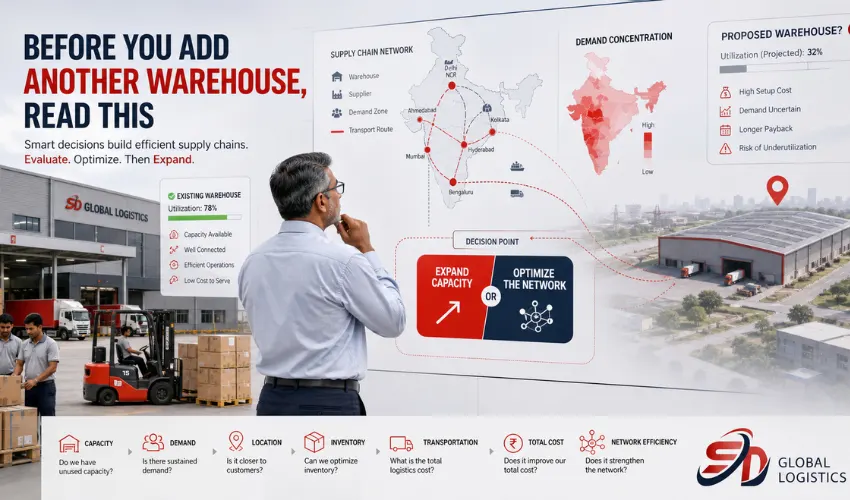

The answer is not always to build another warehouse. Before making a decision on an expansion, companies should look at true capacity utilization, inventory location, customer distribution, transportation costs, operational efficiency....
View Blog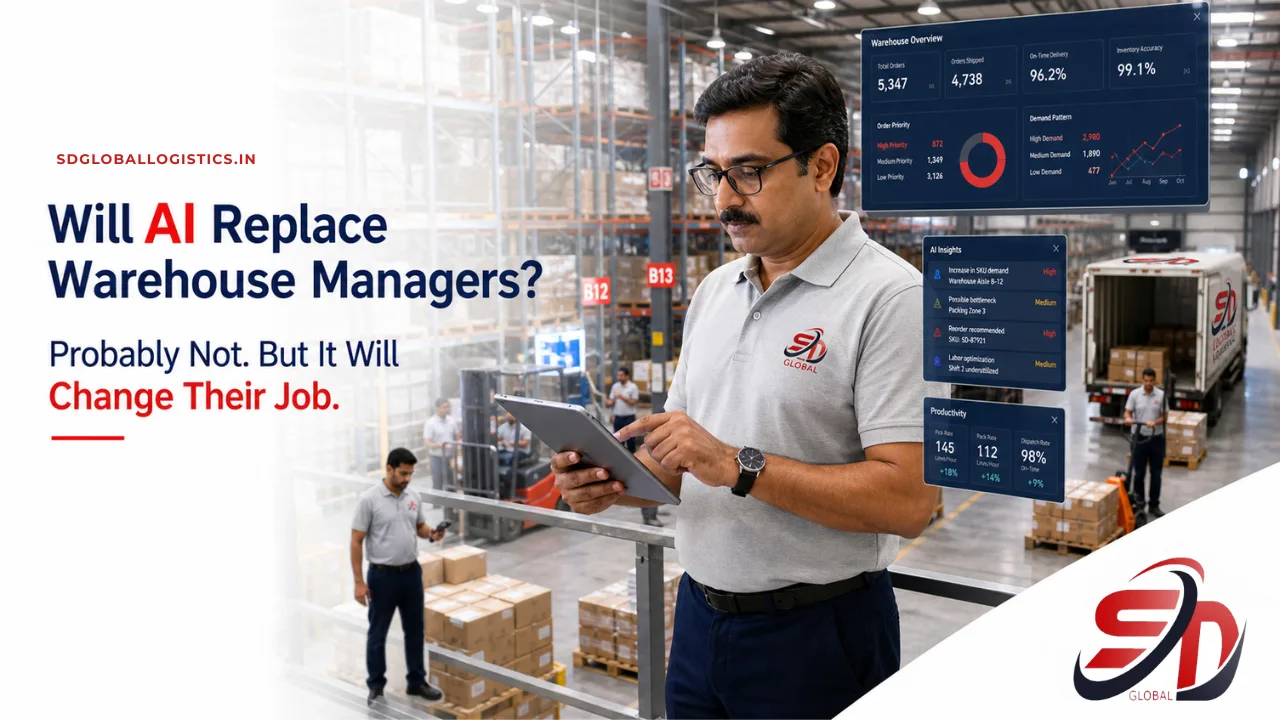
Warehouse managers will not be replaced by AI. Human judgment, leadership, exception handling and real-time coordination are still required in warehouses.But AI will be making more routine decisions — and get managers in the habit of data-driven management....
View Blog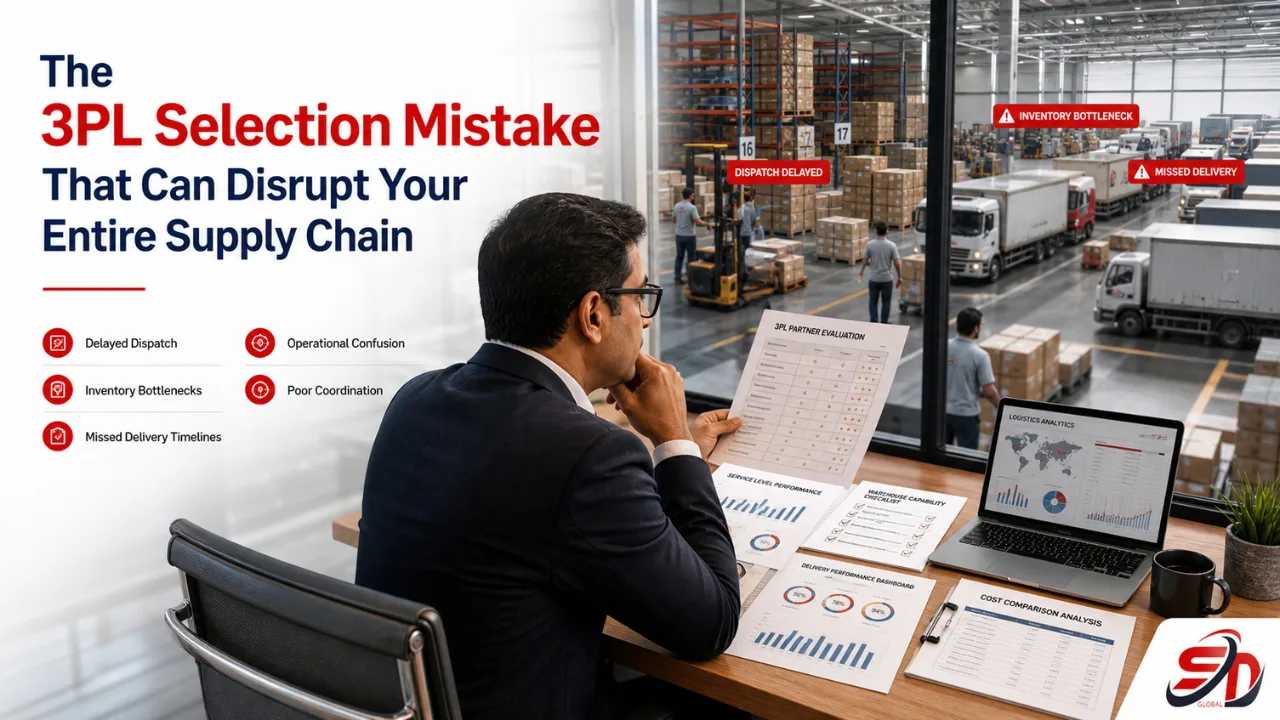
The most common error that companies make when choosing a 3PL is simply looking at the cost or warehouse capacity without assessing operational capability, technology, network, scalability, service levels and supply chain impact.
View Blog75+ warehouse locations positioned across major industrial, commercial and distribution markets.
Marcus
Ask me anything, I am here to help you.