

Marcus
Ask me anything, I am here to help you.
Enquiry Form
Enquiry Form
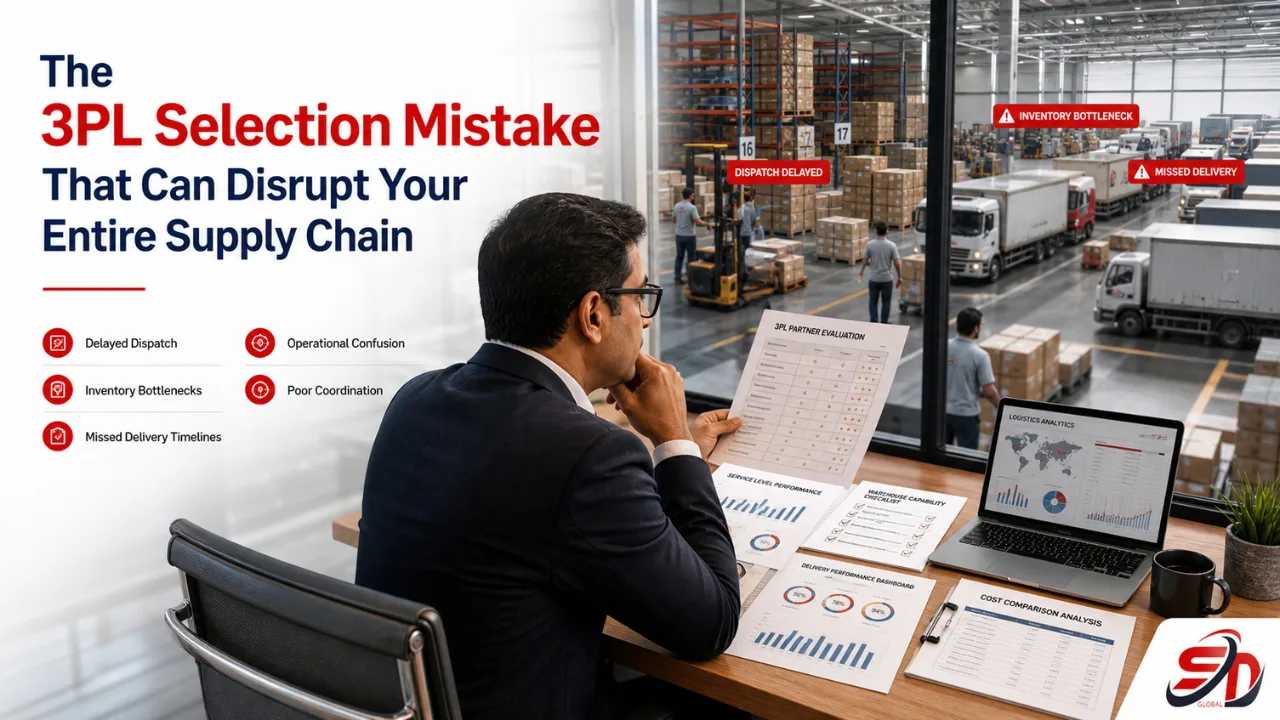
The most common error that companies make when choosing a 3PL is simply looking at the cost or warehouse capacity without assessing operational capability, technology, network, scalability, service levels and supply chain impact.
That one decision can trigger problems far beyond storage.
While more and more Indian companies are seeking new logistics capabilities and complex supply chain solutions from their 3PL service providers, many still choose their provider based on the most basic and unreliable measure of all: lowest quote.
This guide helps you make a smarter choice.
Most companies consider 3PL providers in the same way they would consider a commercial property lease. They look at square footage, rent per month, and location on a map.
That approach misses the point entirely.
The relationships associated with third-party logistics are typically more complex than traditional logistics supplier relationships. They are strategic alliances that enhance an organisation's flexibility in meeting rapidly changing market conditions and support long-term growth.
When you treat a 3PL provider selection decision like a real estate decision, you sign a contract with a vendor — not a partner. The difference shows up in your operations every single day.
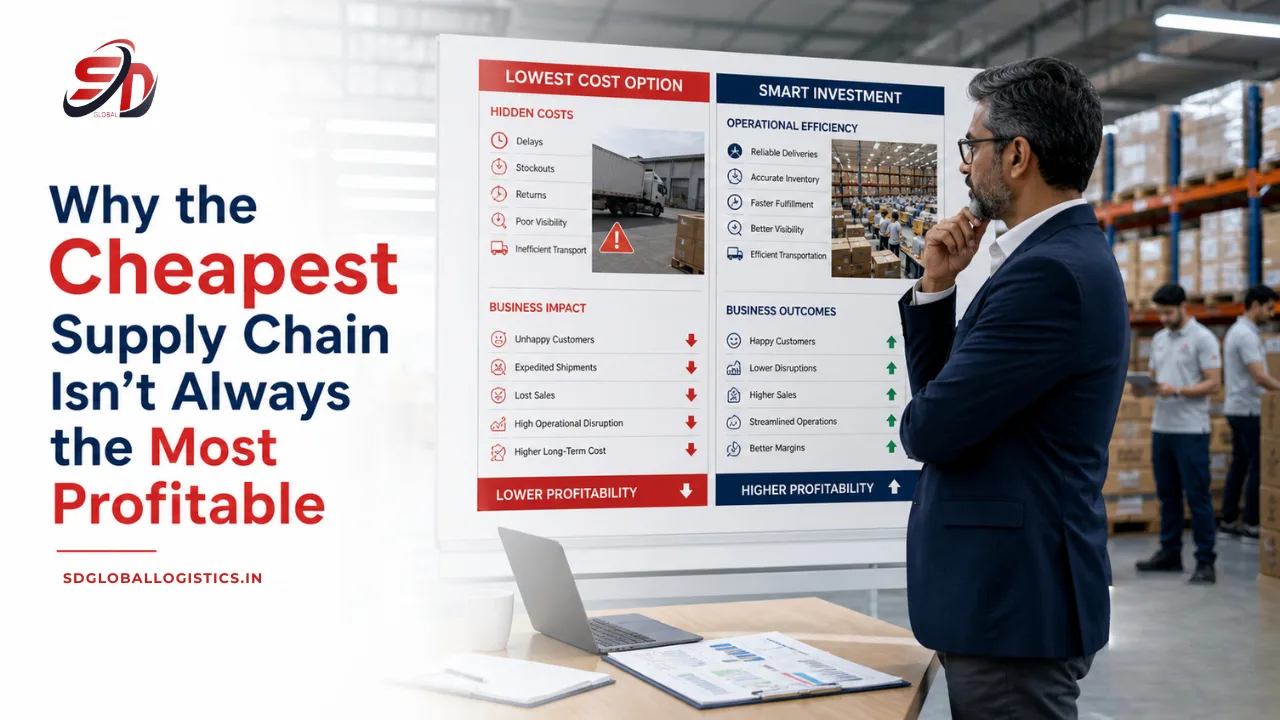
A low quoted rate is not the same as a low cost-to-serve. Here is a practical example of how this plays out:
Low 3PL Rate → Limited Manpower → Slower Pick-and-Pack → Dispatch Delays → Expedited Freight → Higher Transport Costs → Customer Complaints
One of the biggest mistakes businesses make is how to select a 3PL partner based solely on price. Low-cost logistics services in India often come with hidden costs in the form of delayed deliveries, inventory discrepancies, and poor service levels.
Key Takeaway: A 3PL quote tells you what the service costs. It does not tell you what the supply chain will cost.
| What Businesses Compare | What They Should Actually Evaluate |
|---|---|
| Warehouse rent | Total logistics cost-to-serve |
| Handling rate per unit | Productivity and accuracy rate |
| Storage capacity in sq. ft. | Usable operational capacity |
| Freight rate per shipment | Freight cost + delivery reliability |
| "We have a WMS" | Visibility depth, accuracy and integration |
| One-city presence | Multi-city and pan-India warehouse network |
Knowing how to choose a 3PL provider requires careful evaluation of capabilities, infrastructure and alignment with business objectives. Here is how to approach it practically.
Location affects everything — transportation management cost, delivery speed, and customer service levels.
Evaluate:Consider the 3PL provider in India's network coverage across major highways, industrial corridors, ports and dry ports, and evaluate their ability to manage intercity and interstate consignments efficiently.
Do not evaluate square footage alone.
Check for:10,000 sq. ft. of poorly managed 3PL warehouse space delivers less value than a smaller, well-operated, technology-enabled facility.
In the absence of real-time visibility, businesses find it difficult to keep track of inventory, track shipments, identify delays, and make informed decisions. The technology-based 3PL solution should include inventory visibility, shipment tracking, reporting dashboards, system integration, and other 3PL warehousing, transportation management, and distribution capabilities.
A 3PL should be able to explain:If the answer is vague, that is a problem.
A well-equipped 3PL warehouse in India without disciplined processes still fails.
Ask directly:Every reliable supply chain management operation runs on discipline — clear SOPs, scanned check-ins, and daily inventory reconciliation. Skip this, and the warehouse looks fine until customers call saying they received the wrong product.
A 3PL services provider that works today but cannot scale tomorrow becomes a bottleneck.
Evaluate whether the provider can support:A scalable 3PL warehousing in India solution involves infrastructure that grows with your needs—warehousing, personnel, and delivery capabilities, all primed and prepared before the surge in demand.
Warehouse services and transportation management should never be evaluated in isolation. 3PL warehousing directly influences delivery speed, inventory accuracy, order fulfillment quality, and transportation efficiency. A poorly managed 3PL warehouse creates operational pressure across the entire supply chain management function.
Evaluate:A signed contract is not the same as a managed logistics management relationship.
A strong 3PL should offer:Without measurable accountability, problems go unresolved and service levels erode quietly.
Watch for these warning signs during your 3PL provider selection process:
Use this checklist when evaluating third-party logistics companies in India:
When shortlisting 3PL logistics in India providers, score them across multiple dimensions — not only cost. Here is an illustrative evaluation framework you can adapt to your own requirements:
| Evaluation Category | Illustrative Weight |
|---|---|
| Cost and pricing structure | 20% |
| Warehouse management and operational capability | 20% |
| Technology and inventory management visibility | 15% |
| Location and warehouse network coverage | 15% |
| Order fulfillment and delivery performance | 15% |
| Scalability and flexibility | 10% |
| Governance, reporting and SLAs | 5% |
The value of a capable third-party logistics partner extends well beyond cost reduction. A well-selected provider helps you coordinate the entire chain:
Warehouse → Inventory → Fulfillment → Transportation → Returns → Reporting
When each stage is managed with operational discipline and technology, the value shows up as:
Follow this structured process before signing any contract logistics agreement:
Not every 3PL services in India provider will deliver all of this automatically. It depends on their systems, processes, and commitment to accountability.
Map your current and future logistics management needs — volumes, locations, SKU count, fulfillment model, and service expectations.
Filter third-party logistics companies in India based on network coverage, industry experience, and stated capabilities — not just quoted price.
Visit the 3PL warehouse. Ask to see live operations. Review SOPs, WMS demonstrations, and staff management practices.
Evaluate total cost-to-serve across all providers. Compare KPI commitments, reporting capabilities, and contract logistics flexibility side by side.
Validate claims against actual 3PL warehousing capability. Confirm scalability plans. Review the contract for accountability terms — not just commercial terms.
The wrong 3PL provider can create delays, stockouts, inventory inaccuracies, and rising logistics expenses. As supply chains become more complex, businesses need third-party logistics partners that can deliver efficiency, scalability, and visibility across every stage.
The decision is not about finding the cheapest provider. It is about finding the right one.
Evaluate carefully. Audit thoroughly. Choose a partner — not just a vendor.
From growing businesses to established enterprises, companies rely on SD Global Logistics to manage critical warehousing and logistics operations.














" We struggled with inconsistent inventory handling until SD Global stepped in with dedicated warehousing and tight process control. Their attention to detail brought stability to our entire supply chain. "

" Reverse logistics was a major pain point for us. With SD Global’s reverse logistics management and WMS integration, we finally got the visibility and efficiency we needed. "

" As a growing startup, flexibility was key. SD Global’s on-demand warehousing and responsive support scaled with us without locking us into rigid contracts. "

" Order delays used to slow us down. Thanks to SD Global’s order fulfillment and B2B logistics, we’re now running faster and more reliably than ever. "

" Our nationwide expansion needed a reliable network. SD Global’s Pan-India 3PL and shared warehousing model gave us the reach and agility we were missing. "

The most common error that companies make when choosing a 3PL is simply looking at the cost or warehouse capacity without assessing operational capability, technology, network, scalability, service levels and supply chain impact.
View Blog
The cheapest supply chain is not always the most profitable — because cutting costs in one area almost always creates higher costs somewhere else. A low-cost warehouse in a remote location adds cos to transportation. The lower the wages, the more mistakes get made.
View Blog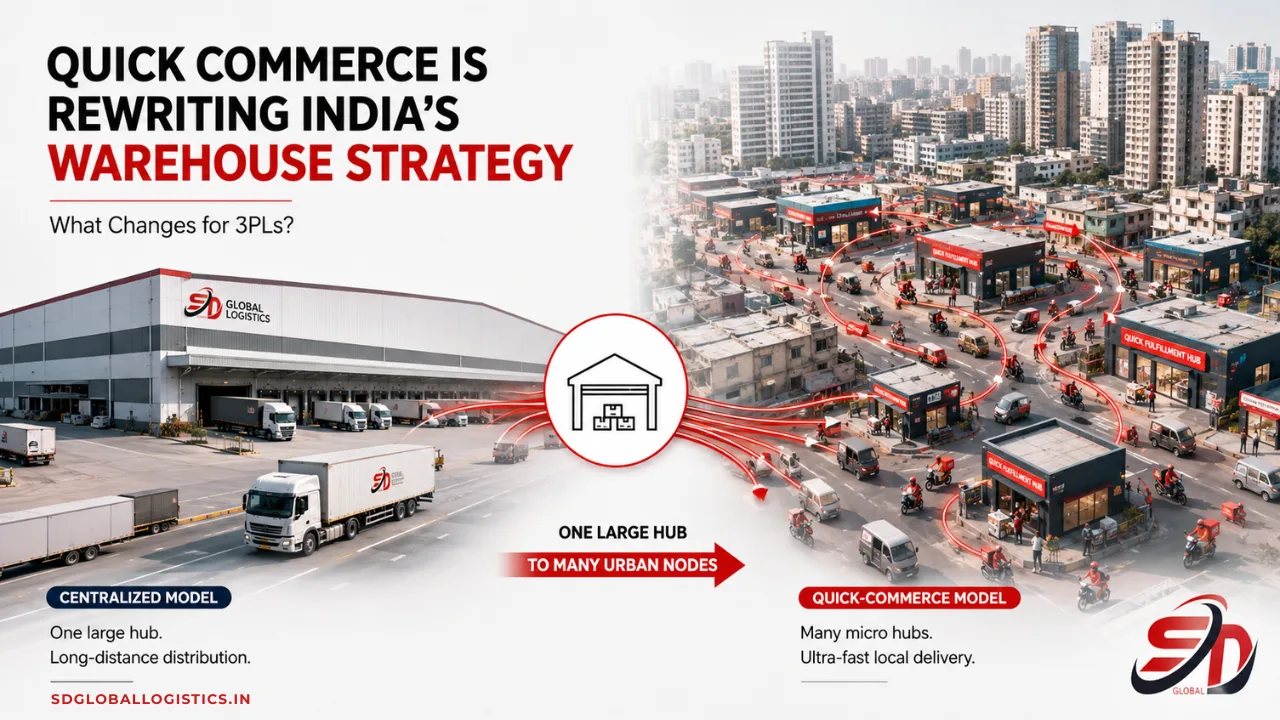
Quick commerce is pushing businesses away from centralised warehousing toward faster, more distributed fulfilment networks — and it is changing everything about how 3PLs manage inventory, locations....
View Blog75+ warehouse locations positioned across major industrial, commercial and distribution markets.
SD Global Logistics — your pan-India partner delivering scalable warehousing, technology-driven supply chain solutions and reliable, cost-efficient logistics for growing businesses
Developed By Rapiditors Technology India Pvt Ltd © 2025. All rights reserved.
Marcus
Ask me anything, I am here to help you.