

Marcus
Ask me anything, I am here to help you.
Enquiry Form
Enquiry Form
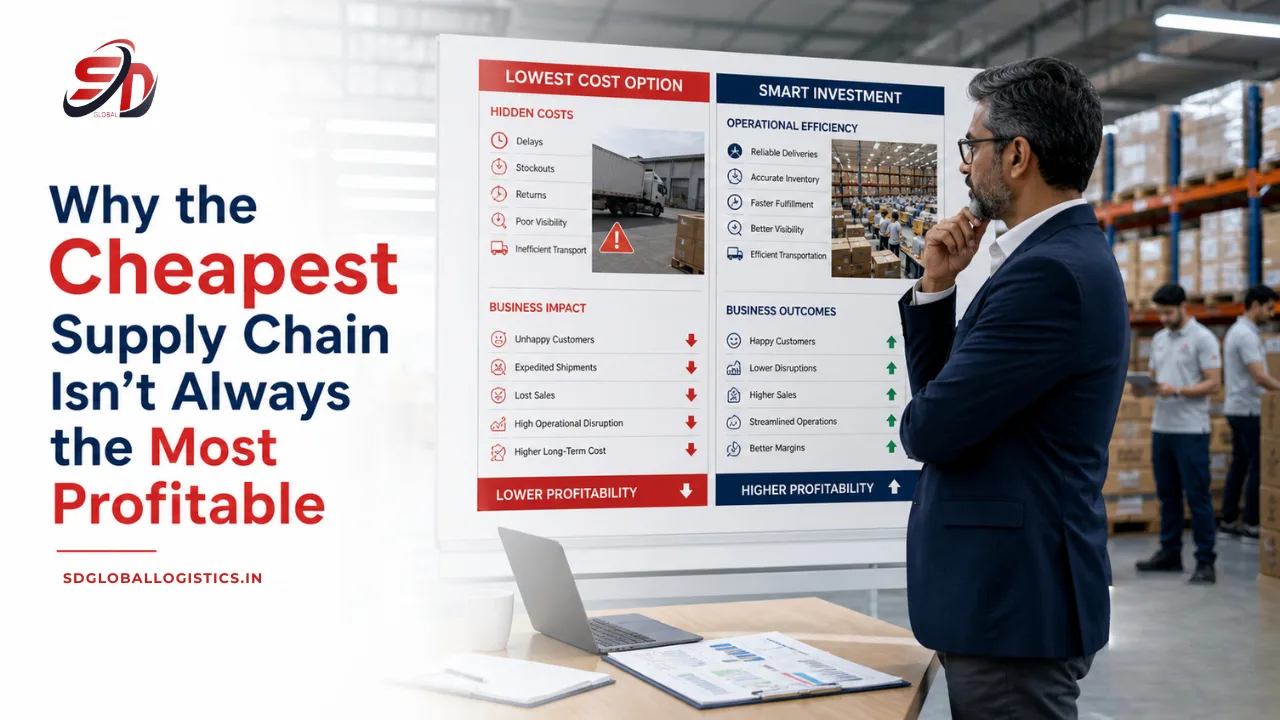
The cheapest supply chain is not always the most profitable — because cutting costs in one area almost always creates higher costs somewhere else. A low-cost warehouse in a remote location adds cost to transportation. The lower the wages, the more mistakes get made. Delayed carriers, due to their discount rates, leads to expedited shipping or lost customers.
This is the cost trap most businesses do not see coming.
Most companies evaluate the performance of logistics management based on the cost of each service, such as warehouse rent, freight rate, labor cost, etc. That approach is dangerously incomplete.
The real measure is Total Supply Chain Cost:
When you only optimise one part of this equation, the other parts expand. You save on warehouse costs and spend it on fuel. You save on freight and lose it on stockouts.
Key takeaway: Cheap ≠ Efficient. Low cost ≠ Low total cost. Low logistics cost ≠ High profitability.
Many businesses focus on reducing visible logistics costs like freight and warehousing services, but the biggest impact on profitability often comes from hidden supply chain costs — including excess inventory costs, warehouse inefficiencies, emergency transportation services, inventory inaccuracies, and product damage.
Here is where those costs typically enter the supply chain:
The Flow Where Costs Creep In:
Supplier → Warehouse → Inventory → Transportation → Customer
| Stage | The "Cheap" Decision | The Hidden Cost Created |
|---|---|---|
| Warehouse | Remote location for low rent | Higher last-mile transportation costs |
| Transportation | Cheapest carrier, no SLA | Delivery delays, expedited re-ships |
| Labour | Unqualified staff at low wages | Errors, damage, rework, returns |
| Inventory | Bulk buying for price breaks | Dead stock, high inventory costs |
| Technology | Manual processes over warehouse management system | Inaccurate inventory, missed order fulfillment |
Suppose a business decides to locate a warehouse 80 km away from a big city, where the rent is ₹8 per sq. ft. as against ₹18 per sq. ft. in the city. The rent saving looks impressive on paper.
But here is what that decision creates:
GST has structurally changed where businesses should warehouse their inventory — and most have not yet fully re-optimised their networks. One of the most common and costly mistakes that people make in the field of supply chain management in India today is choosing a warehouse just based on rent and not considering network location.
Key takeaway: The cheapest warehouse services in India can easily become the most expensive warehouse decision.
Poor logistics management creates inventory management problems. Businesses compensate for unreliable supply chains by holding more stock. That stock costs money to carry, insure, handle, and eventually discount or write off.
In retail, time directly determines value. The longer inventory takes to move, the more capital it locks up without generating returns.
What excess inventory actually costs:
Many Indian supply chains over-stock because they lack real forecasting visibility — and inventory hides inefficiency instead of solving it.
A delayed delivery is never just a delivery problem. It creates a chain of financial consequences that often cost far more than the logistics cost reduction that caused it.
Relying too heavily on a single carrier or a small group of transporters limits your negotiating power and increases your operational risk. If your primary carrier has a bad month, your entire supply chain feels it.
Returns are already expensive. Poor logistics services in India makes them dramatically worse.
Reverse logistics further amplifies the problem. The cost of a return could be up to 1.5 times the cost of the original delivery, including transportation, sorting, grading, and restocking. Return rates in categories such as fashion vary from 30 to 35 percent, and cash on delivery rejections can be up to 26 percent.
When your reverse logistics process is slow or disorganised, returned goods sit, degrade, and become unsellable. That is not a logistics cost. That is direct product revenue lost.
Stop measuring logistics management by how little you spend. Start measuring it by what it delivers.
The strongest supply chain does not aim for the lowest individual cost. It aims for the best cost-to-service outcome across every stage.
As companies seek to optimise their supply chain cost optimization in India, third-party logistics providers are gaining prominence — offering end-to-end logistics services in India that enable businesses to focus on core operations while ensuring warehousing services, transportation services, and distribution.
A strategic 3PL logistics partner helps businesses identify and eliminate hidden costs through technology, process optimisation, and end-to-end supply chain visibility.
What a strong 3PL partner should bring:
When you're the owner of your own warehouse, you're responsible for paying fixed expenses such as rent, utilities, insurance, taxes, and security, regardless of whether you're a busy or slow month. That can become a problem when sales drop. Your warehouse might not have the space to accommodate the surge of inventory during busy times, forcing you to invest in additional storage solutions or make hasty expansion choices. A 3PL services in India partner converts those fixed costs into variable, scalable costs that grow and shrink with your business.
Before signing any contract logistics or warehousing services agreement, ask:
Most companies lose money not because of big failures — but because of small, silent inefficiencies embedded in daily operations.
The goal of supply chain management in India is not to achieve the lowest individual cost. It is to achieve the best overall cost-to-service outcome — one that supports your margins, your customers, and your growth.
Cheap is a price. Efficient is a result.
Measure your supply chain by business outcomes, not by the cheapest rate on a quotation. That shift in thinking is often the most profitable decision a business can make.
From growing businesses to established enterprises, companies rely on SD Global Logistics to manage critical warehousing and logistics operations.
















" We struggled with inconsistent inventory handling until SD Global stepped in with dedicated warehousing and tight process control. Their attention to detail brought stability to our entire supply chain. "

" Reverse logistics was a major pain point for us. With SD Global’s reverse logistics management and WMS integration, we finally got the visibility and efficiency we needed. "

" As a growing startup, flexibility was key. SD Global’s on-demand warehousing and responsive support scaled with us without locking us into rigid contracts. "

" Order delays used to slow us down. Thanks to SD Global’s order fulfillment and B2B logistics, we’re now running faster and more reliably than ever. "

" Our nationwide expansion needed a reliable network. SD Global’s Pan-India 3PL and shared warehousing model gave us the reach and agility we were missing. "

The cheapest supply chain is not always the most profitable — because cutting costs in one area almost always creates higher costs somewhere else. A low-cost warehouse in a remote location adds cos.....
View Blog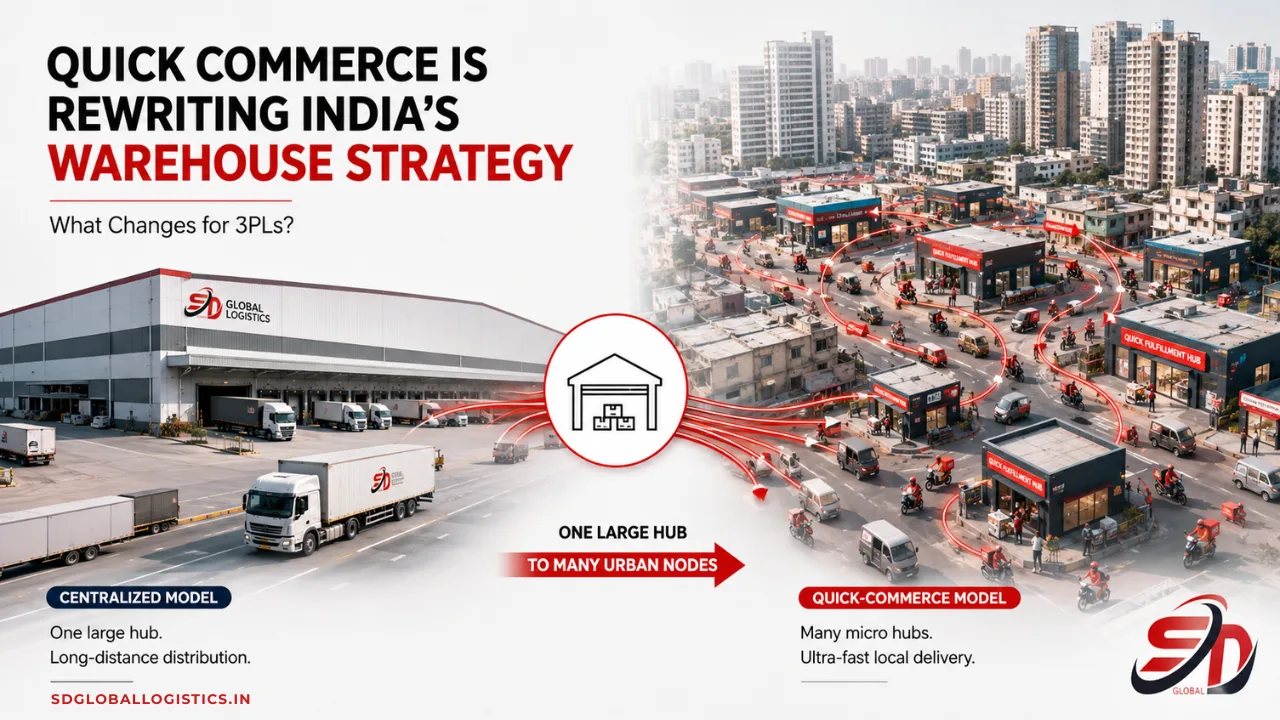
Quick commerce is pushing businesses away from centralised warehousing toward faster, more distributed fulfilment networks — and it is changing everything about how 3PLs manage inventory, locations....
View Blog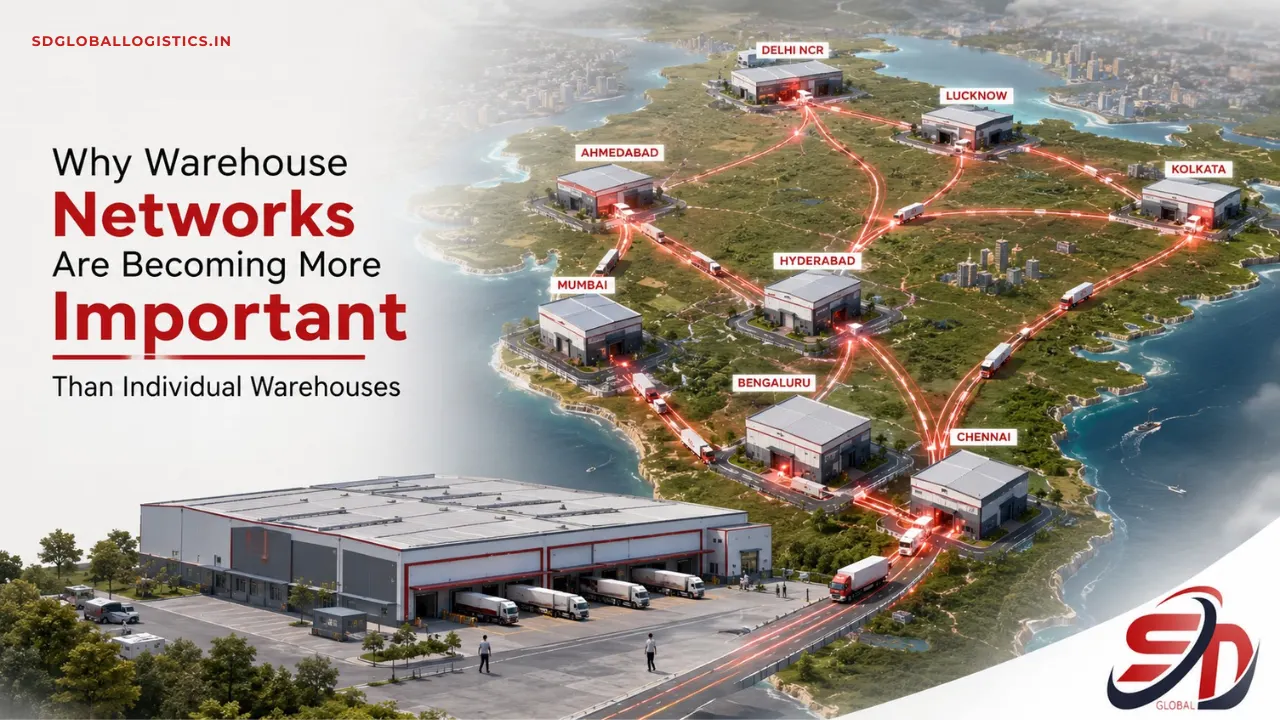
The Core Shift: A warehouse network provides businesses with the ability to locate stock closer to several customer and demand centres, optimising the delivery process, minimising long-distance....
View Blog75+ warehouse locations positioned across major industrial, commercial and distribution markets.
SD Global Logistics — your pan-India partner delivering scalable warehousing, technology-driven supply chain solutions and reliable, cost-efficient logistics for growing businesses
Developed By Rapiditors Technology India Pvt Ltd © 2025. All rights reserved.
Marcus
Ask me anything, I am here to help you.